How to Give Workplaces a Second Life
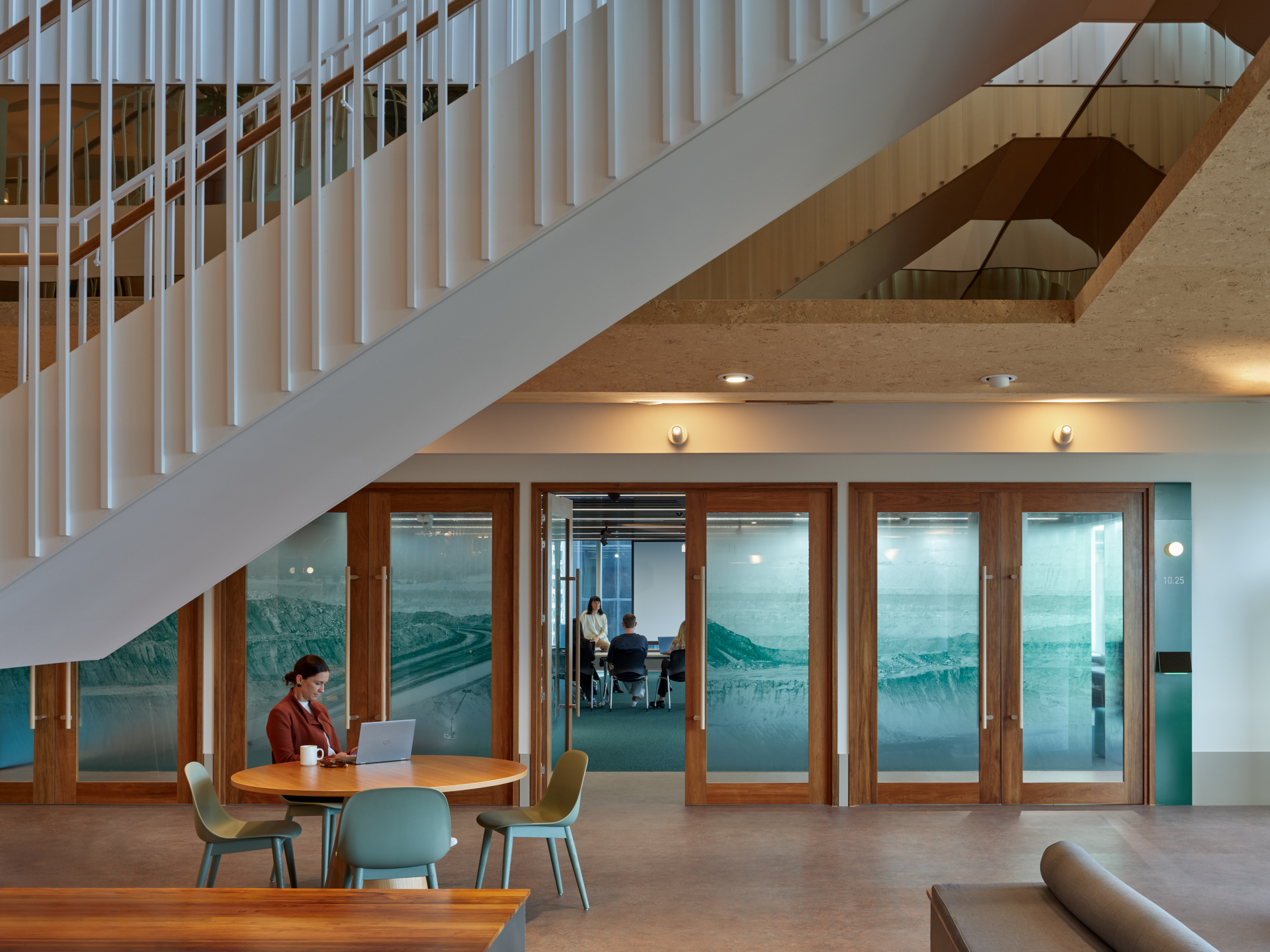
The most sustainable workplace is one that builds on what already exists.
Rather than starting from scratch, a project we completed for a global resources company was guided by a clear and enduring narrative – positioning the workplace as a scalable, purpose-driven environment that enhances connection, reflects a culture of excellence and supports wellbeing. Underpinning this is a broader shift in how workplaces are designed, as the industry moves away from traditional, wasteful practices towards more circular and low-impact approaches.
With the built environment responsible for over 40 per cent of global carbon emissions — including both operations and construction — and global floor area expected to double by 2060, embedding sustainability and circular thinking into the design process is increasingly critical. This meant creating a workplace that not only supports its people but also reflects a more responsible approach to how materials are used, retained and reimagined.
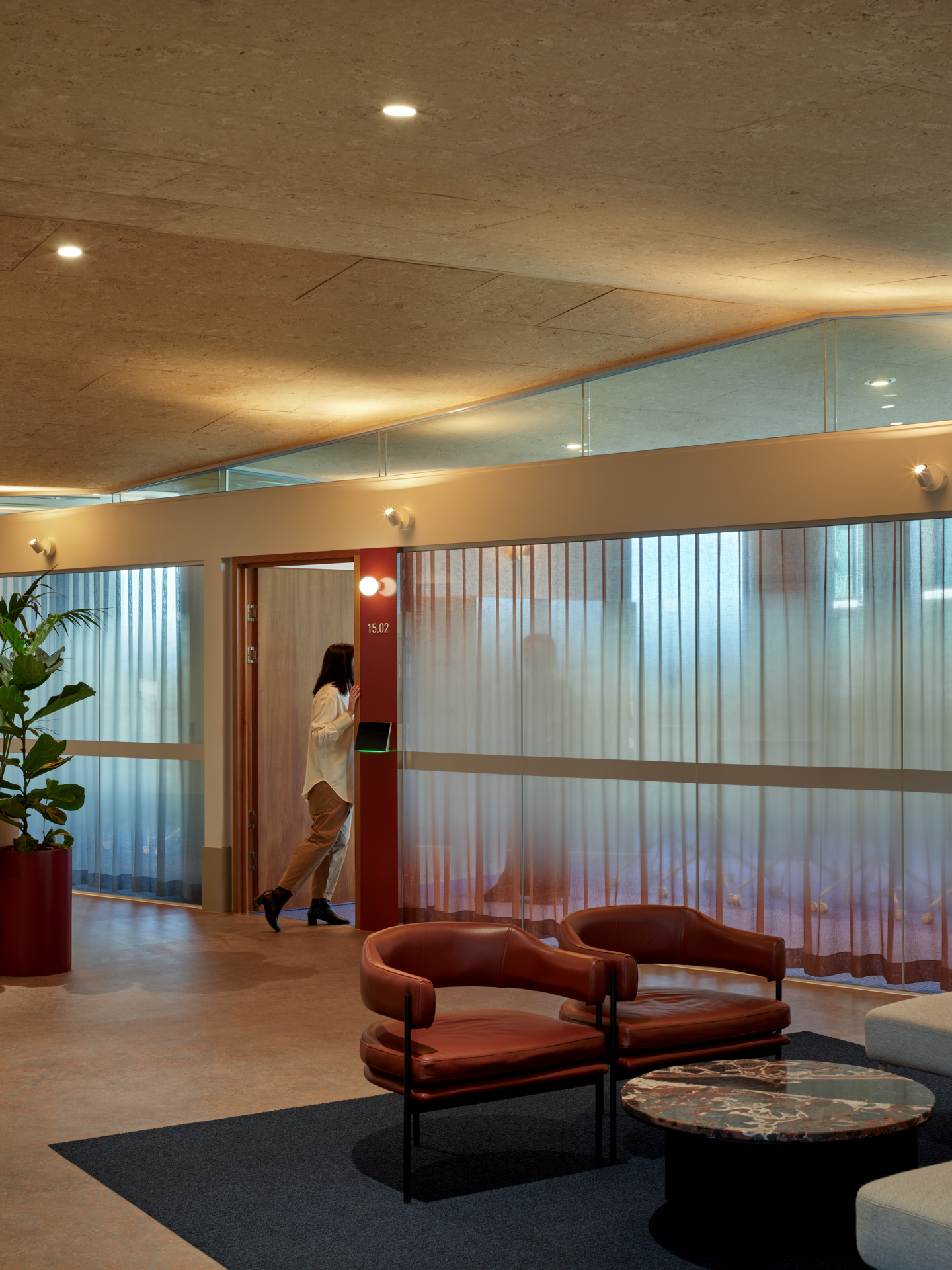
Drawing from the edges of the Brisbane River, the design establishes a series of spatial experiences that balance calm, movement and connection. Focused work areas along the façade adopt a softer, more neutral palette, while collaborative zones introduce energy and variation. Destination spaces bring people together through natural materials, planting and a strong emphasis on wellbeing – creating a workplace that is both high-performing and people-focused.
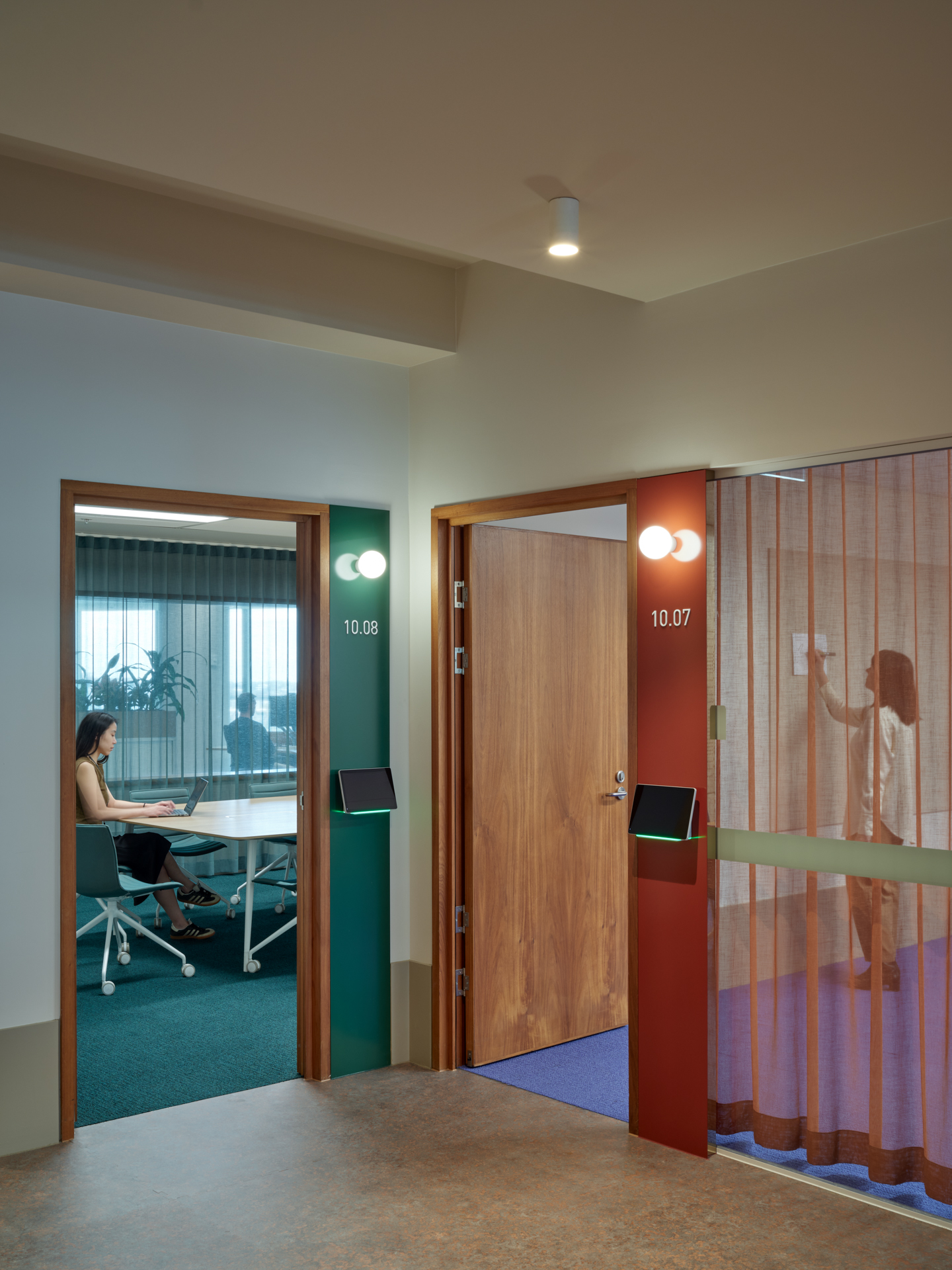
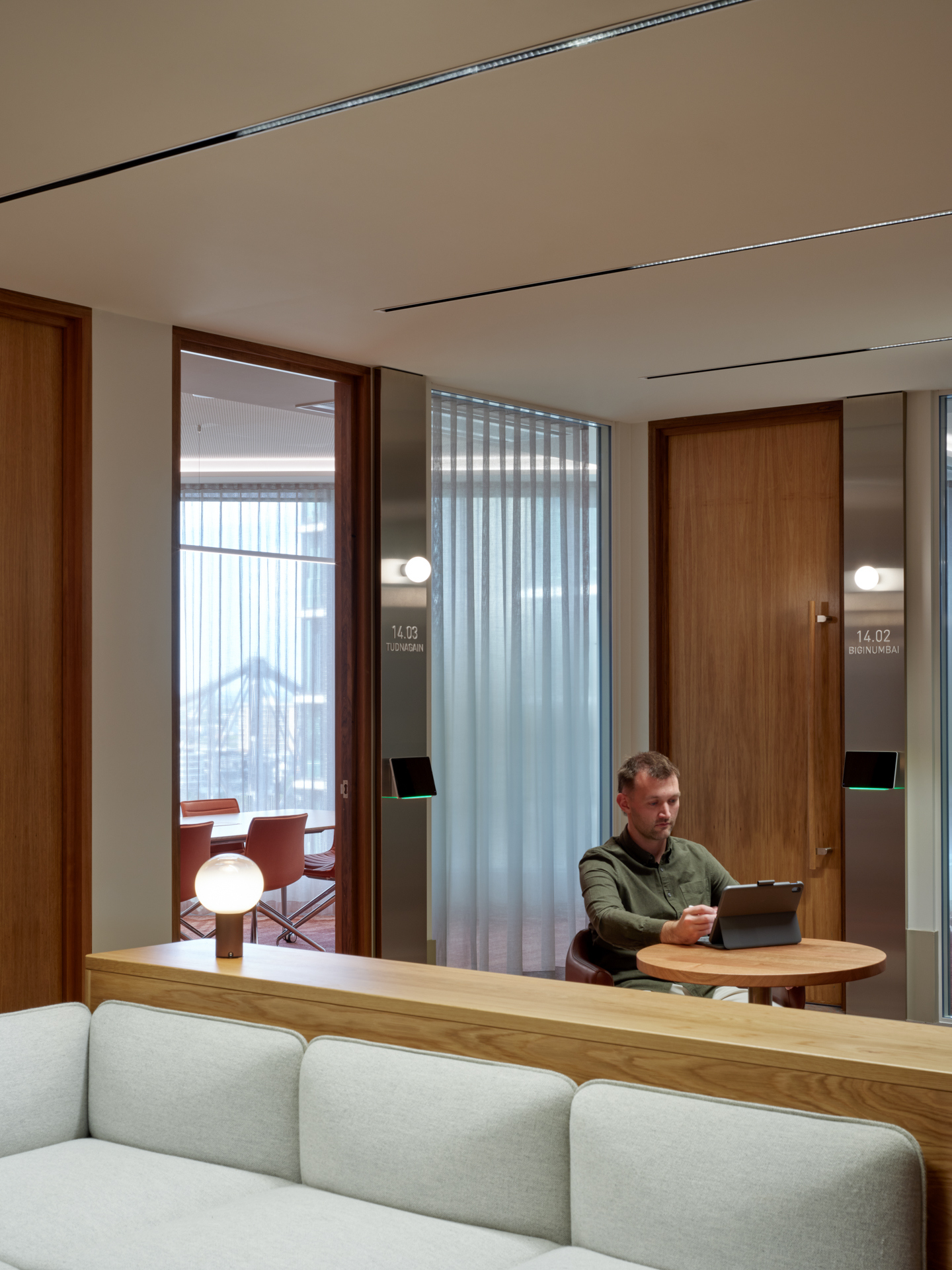
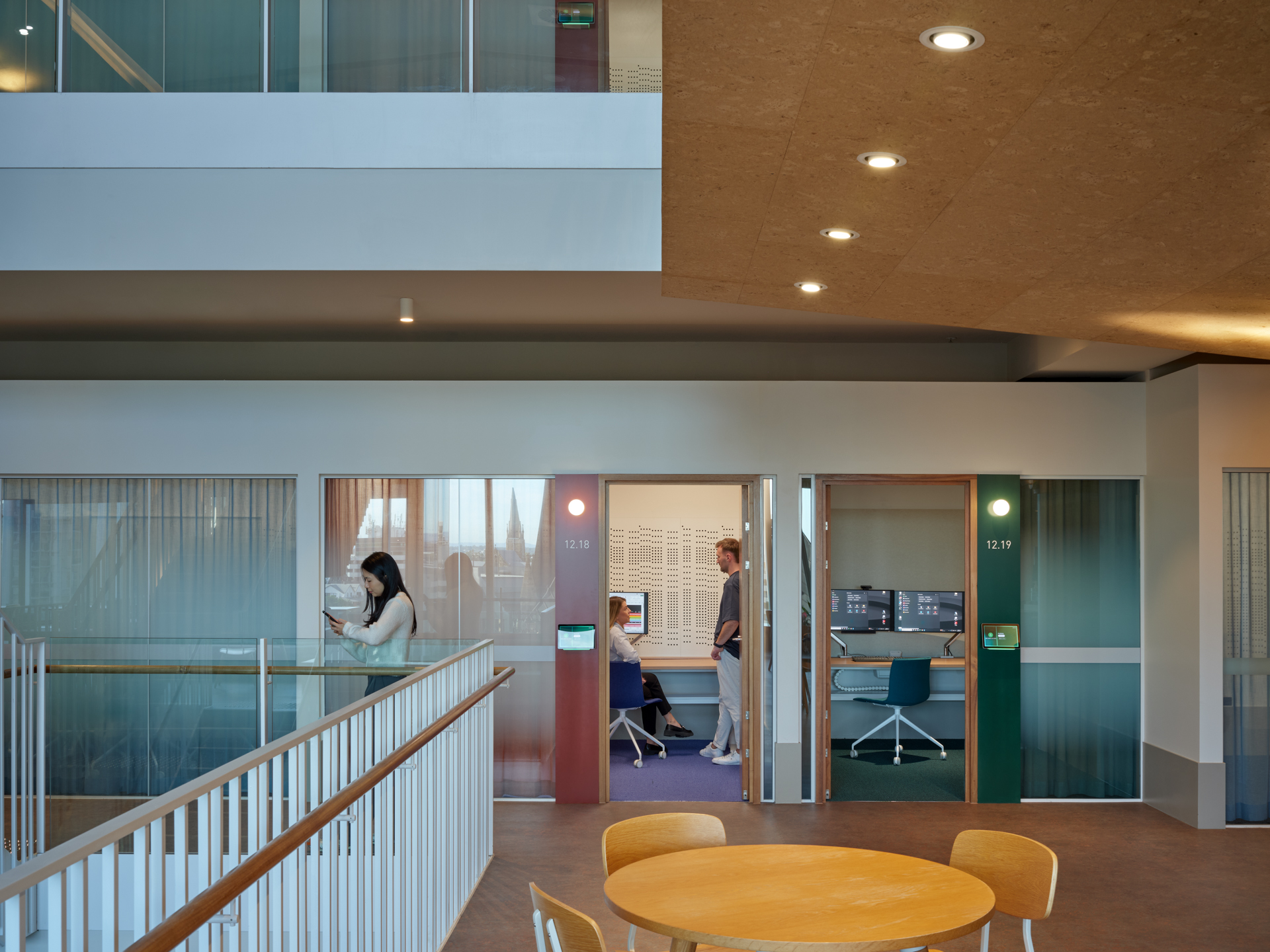
This narrative extends beyond spatial experience, informing a more considered approach to reuse, material selection and construction.
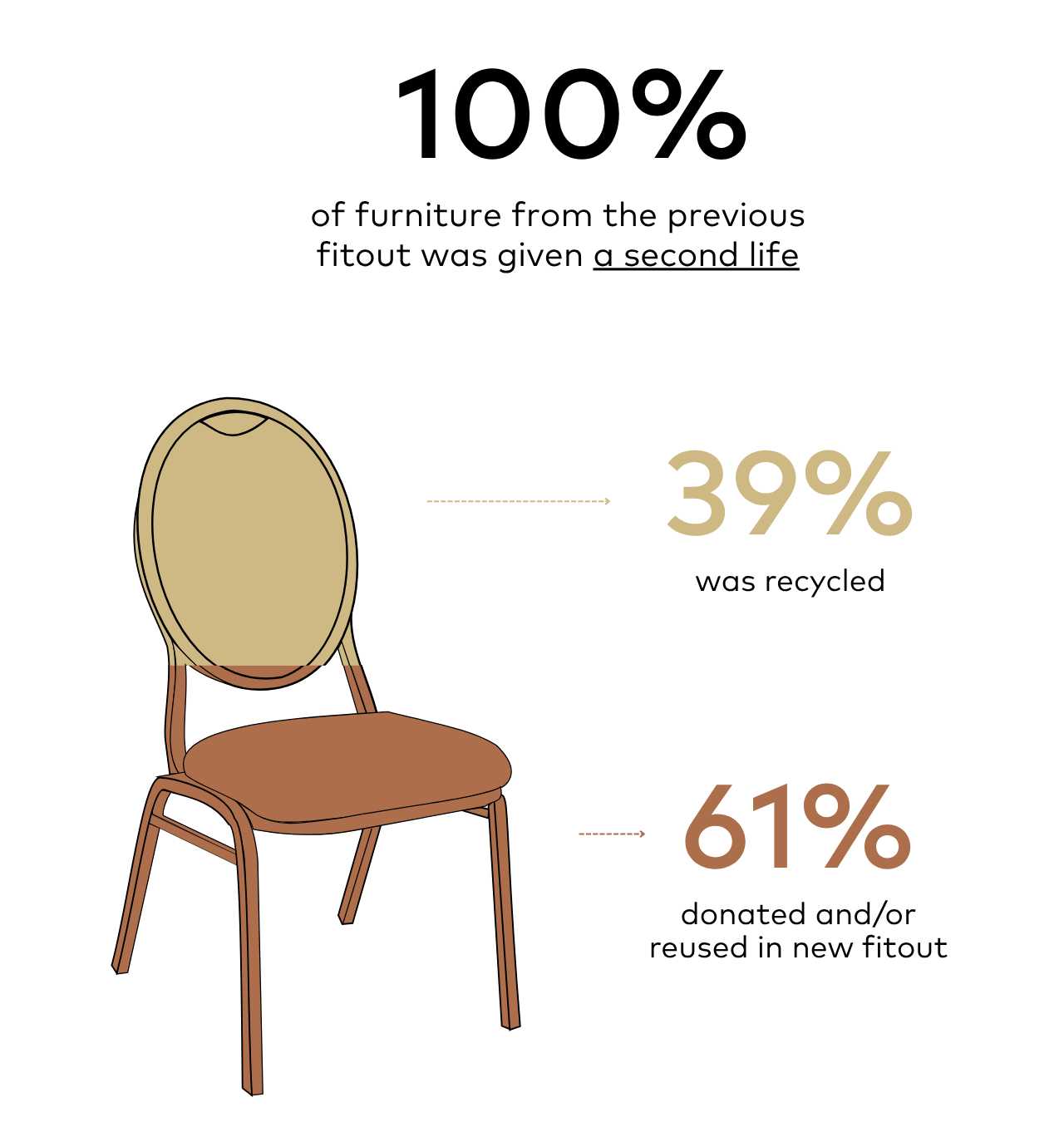
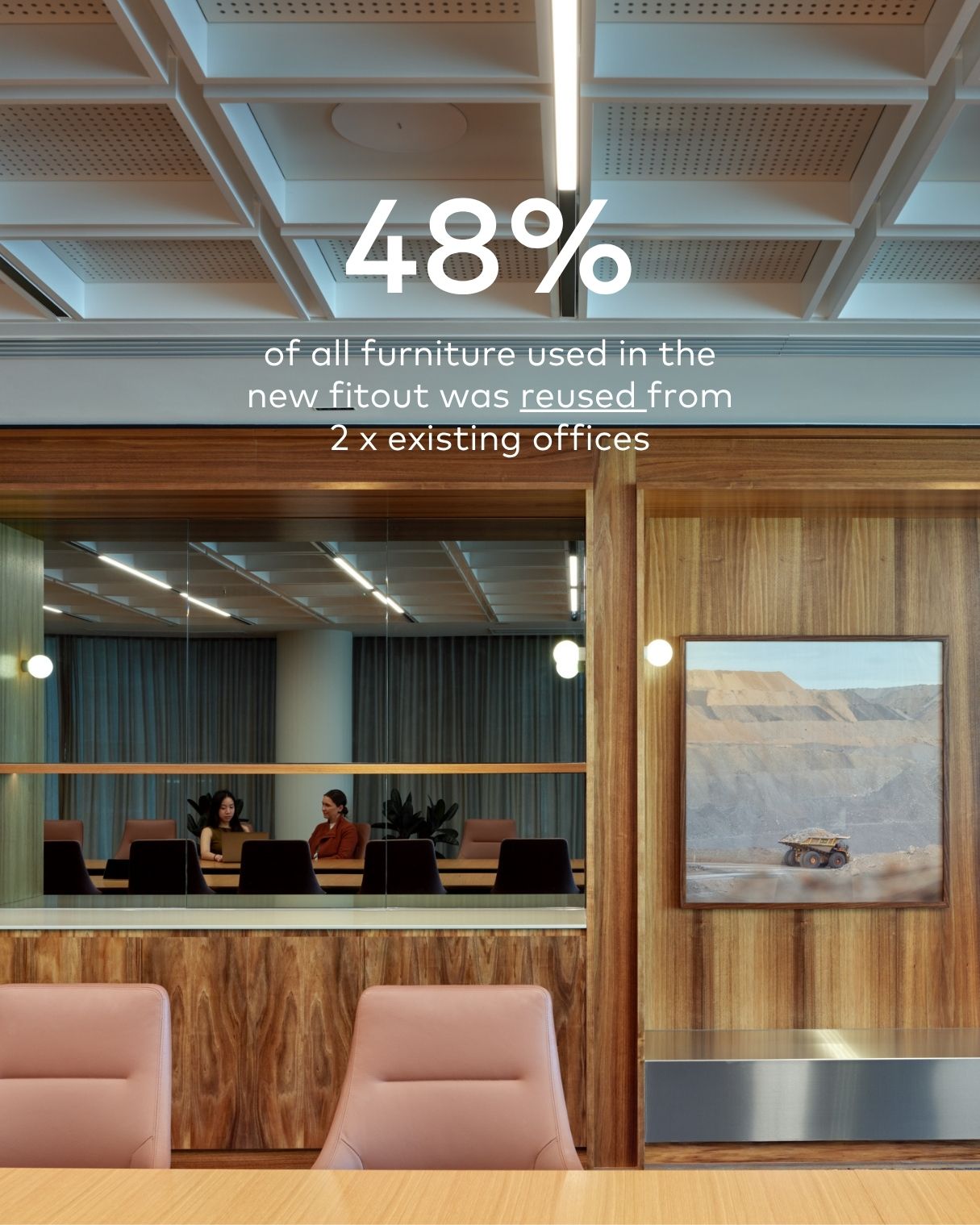
The fitout demonstrates a strong commitment to asset recovery, with the entire existing furniture suite repurposed – 39 per cent recycled, and 61 per cent donated to the community or recirculated. In total, more than 64 tonnes of material were diverted from landfill and given a second life, reinforcing the value of retaining and reusing what already exists. For the new fitout, 48 per cent of all furniture was reused from two former offices.
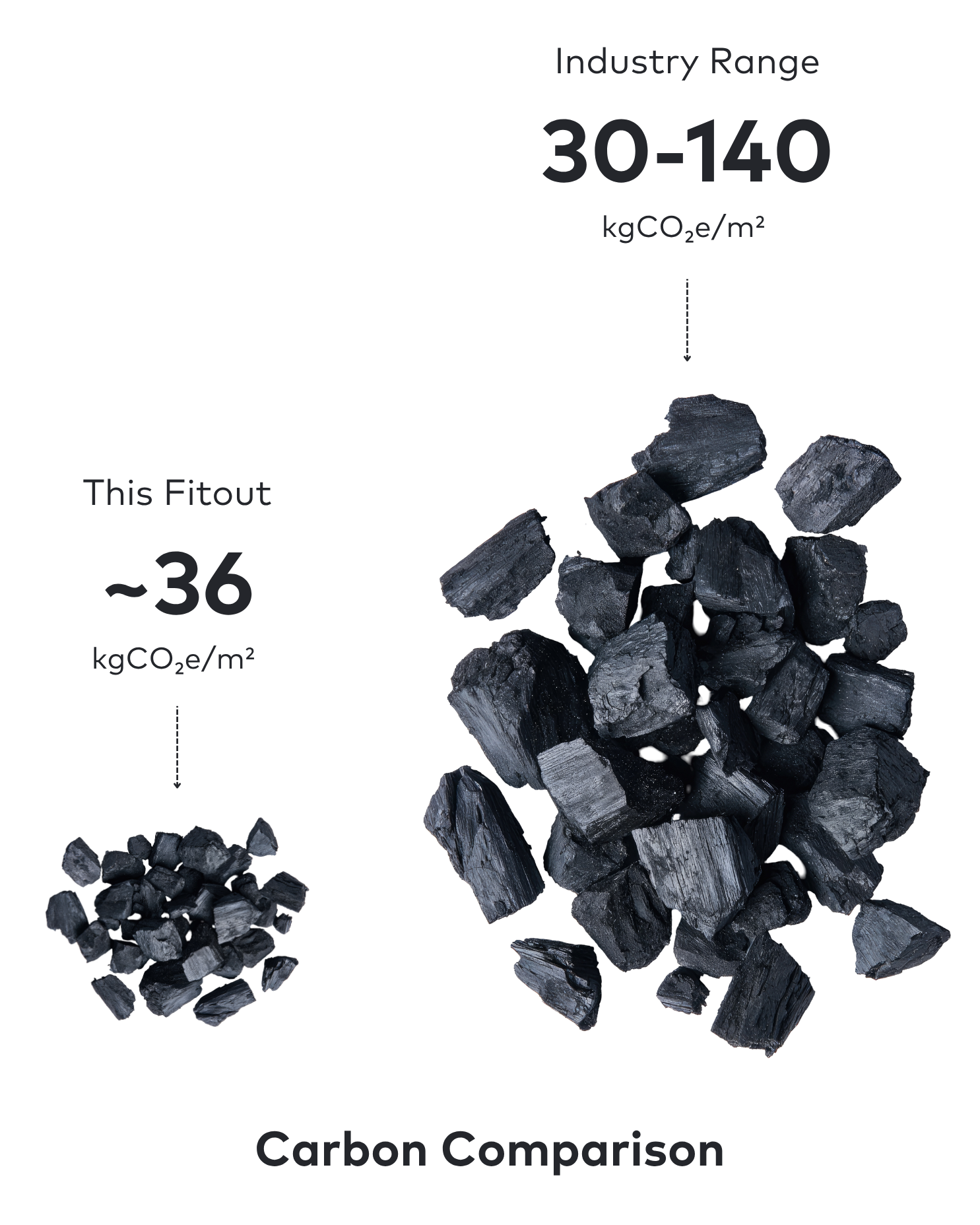
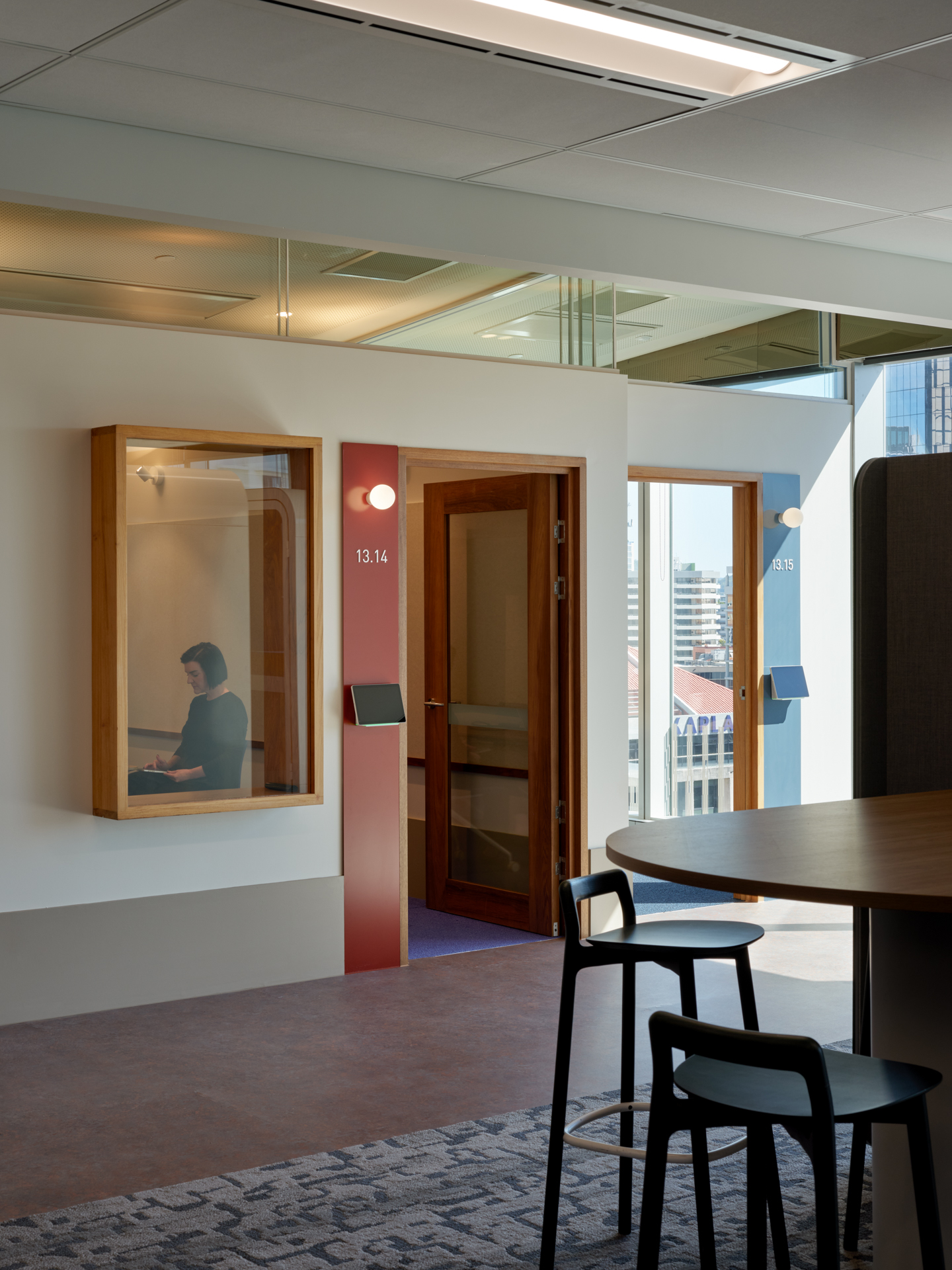
Material selection was approached with the same level of intent. The project achieves an embodied carbon intensity of approximately 36 kgCO₂e per square metre. This places it at the lower end of typical benchmarks for fitouts of this scale, which range from around 30 to 140 kgCO₂e per square metre. This outcome is largely driven by early design decisions, with the majority of emissions associated with material production rather than construction. By prioritising renewable, recycled and low-impact finishes, including timber, cork and recycled carpet tiles, the design reduces upfront impact while maintaining performance and durability.
Importantly, the project also considers carbon beyond reduction. Some materials don’t just reduce impact – they store carbon, locking it into the fitout rather than releasing it into the atmosphere. Around 105 tonnes of carbon is stored within the material palette, representing approximately 20 per cent of the project’s embodied carbon.
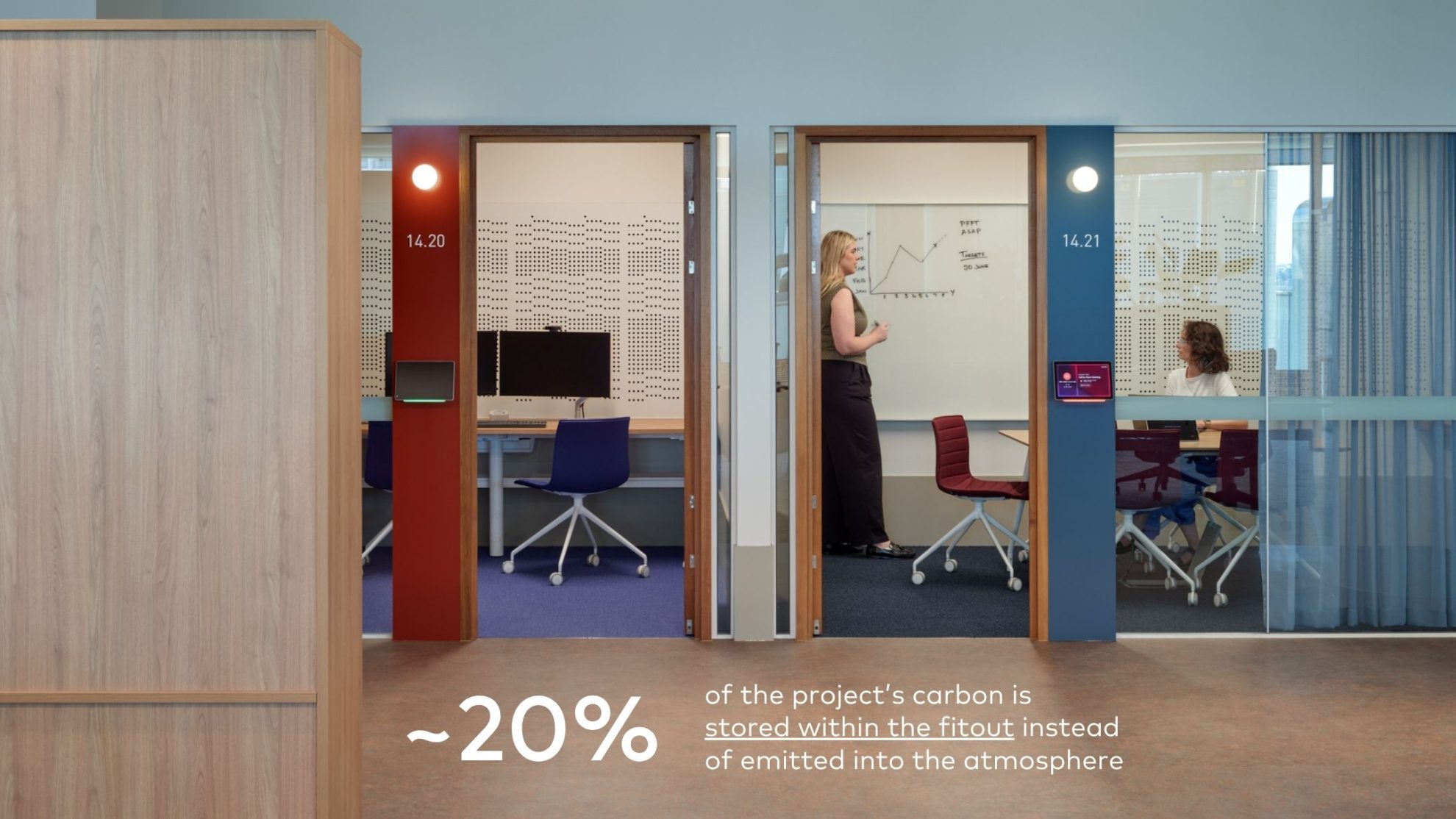
Together, these strategies reflect a shift towards a more circular model of design. With a circularity potential score of over 50 per cent, more than half of the materials used in this new fitout are designed to have a life beyond this project. They are then able to be reused, recycled or responsibly returned at end of life.
The result is a future-ready workplace where narrative, sustainability and performance are intrinsically linked, enabling teams to connect, collaborate and perform at their best.
[Photography by Christopher Frederick Jones]