PROJECT SPOTLIGHT: The dying crafts bringing the treasury building back to life
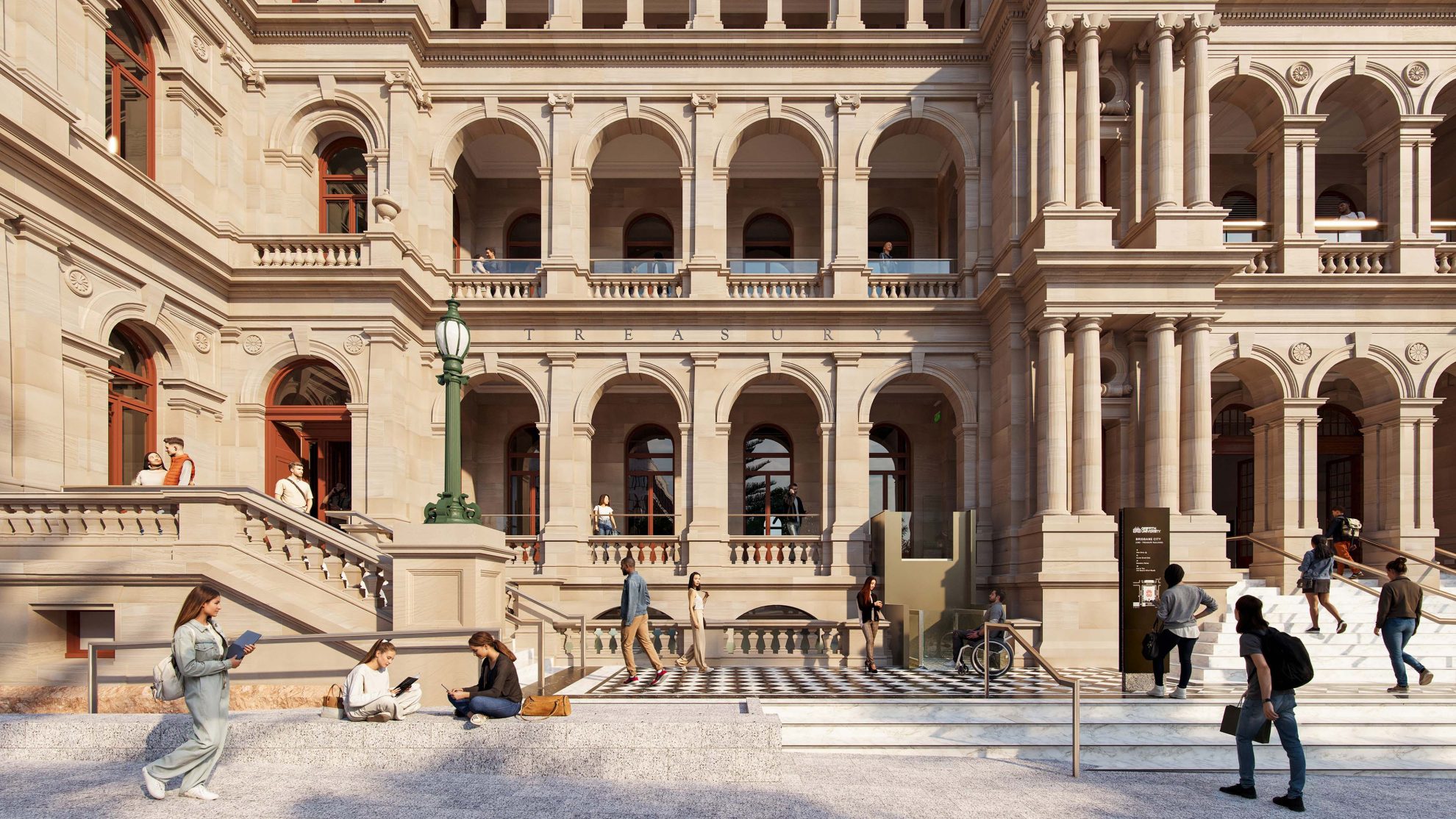
Inside the restoration of Brisbane’s 100-year-old Treasury Building, generations-old techniques are being used to prepare the landmark for its next century.
Behind the scaffolding and hard hats at Brisbane’s Treasury Building, a quieter transformation is underway.
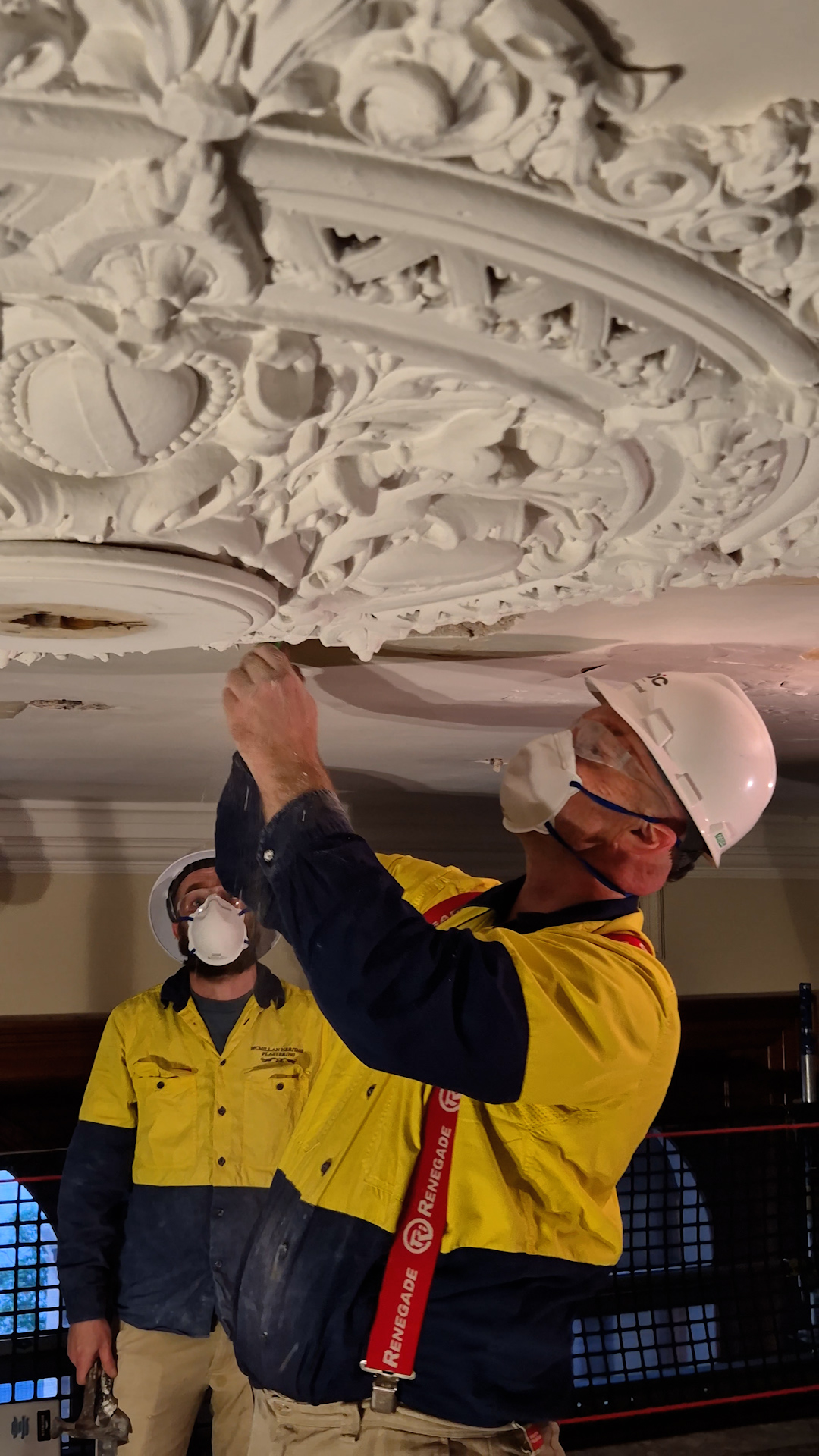
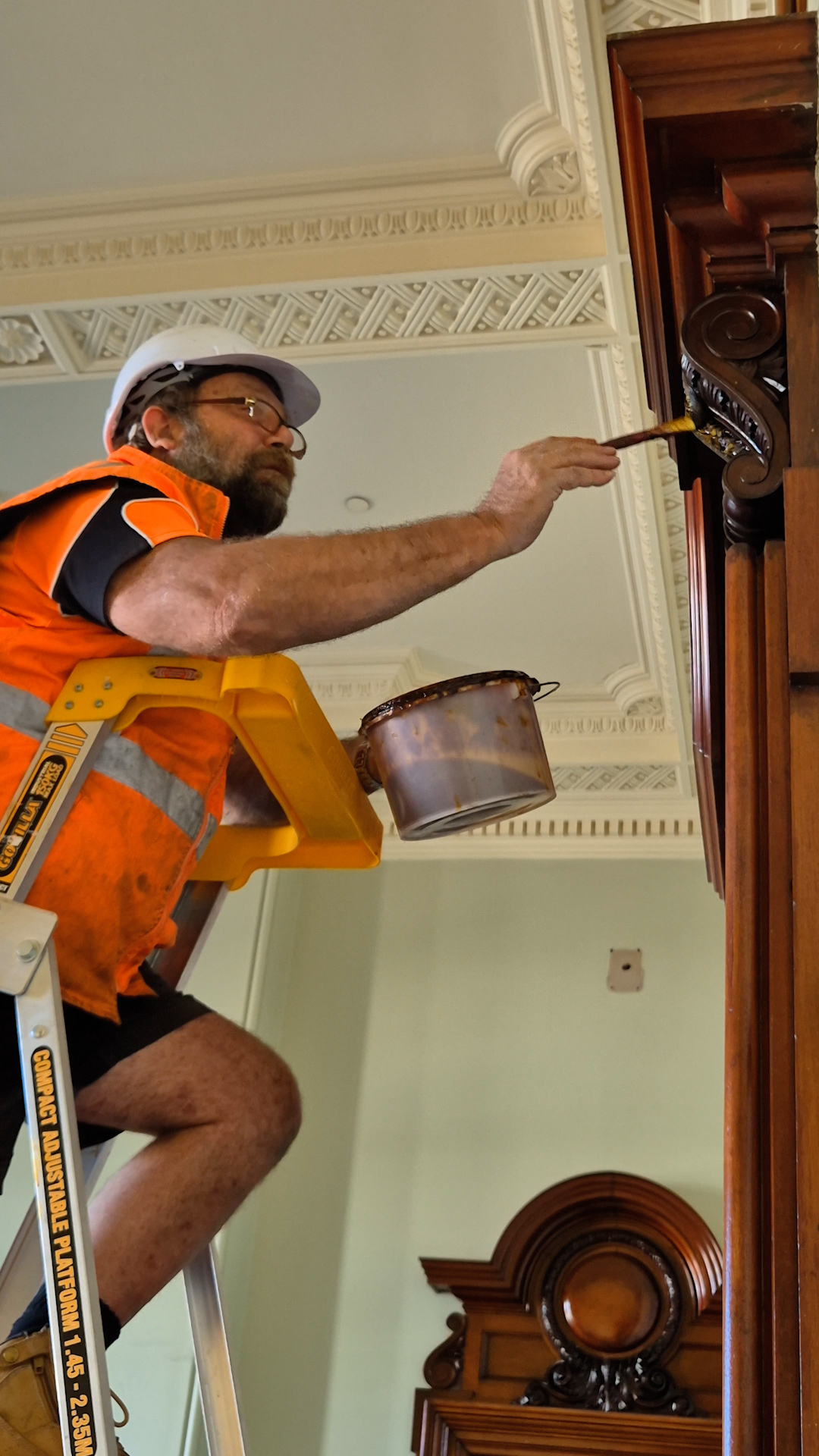
Heritage plasterwork is being formed in situ from lime putty, sand and horsehair, meanwhile, French polishers are painstakingly restoring the ornate details of the historic landmark, in a process where a single metre can take hours to complete.
These are techniques that have endured for generations, but the number of people who know how to practise them is dwindling.
As the Treasury Building is adapted into Griffith University’s new Brisbane City building, conserving its existing fabric has been fundamental to the project.
COX Architecture is responsible for the design of the new teaching and learning space, working alongside Griffith, FDC Construction and Fitout and heritage consultants Lovell Chen.
“Structurally, we’ve kept our approach light-touch. It’s been about respecting and preserving the building’s existing integrity and character, working with its inherent strengths,” said COX Partner, Kellie Newman.
For heritage plasterer Scott McMillan of McMillan Heritage Plastering, that means working much as craftspeople would have when the building was first constructed.
McMillan has spent 25 years mastering in-situ cornice work using lime putty, sand and horsehair and believes he is one of maybe two companies Australia-wide still working this way.
“Unfortunately, it is a dying trade,” he says. “Everything’s got to be done quick now, so heritage and traditional trades are slowly dying.”
The irony is that the slower method may prove far more enduring.
“It takes years of practice to perfect it,” McMillan says. “Providing there are no major services to run through it, our work should last for another 200 years using the traditional materials.”
For McMillan, preserving this matters particularly in Brisbane.
“We’ve lost a lot of heritage in Brisbane, so the little heritage that we have left, it is extremely important to preserve it and do the right thing by it,” he said.
Elsewhere in the building, French polisher Peter Berger is restoring the Cabinet Room’s timberwork and doors by hand, 46 years into his trade. His son, Damien, works alongside him, touching up colour once the shellac has dried.
“This is conservation,” Berger says. “You’re going through, touching it up, just to take the white off and blend it into the rest of its surroundings, and yes, it can take hours. Even a one-metre section can quite literally take hours.”
Like McMillan, Berger believes the longevity of the original building is itself an argument for the materials and techniques used to make it, believing older materials simply outlast newer ones.
“Solid timber has an unlimited life. It just depends on what we do to it. I’d much rather 100-year-old pieces than five-year-old pieces,” he said.
And like McMillan, he worries about who will carry that knowledge forward. “There are more people going out of the trade than coming in, so eventually, it will no longer exist.”
This question of continuity runs through the restoration. Both craftspeople are working alongside the next generation. Berger’s son Damien is already part of the work, and McMillan imagines his own son returning to the building decades from now.
“It means the world, because you get to stamp your mark on it and look back, and in years to come, you can say, yes, I was part of that,” McMillan says. “You never know. In another 50 years, my son might be working here, too.”
Teaching is due to begin at the Treasury Building from Trimester 1, 2027, bringing students and staff into rooms shaped by more than a century of use and by the craftspeople working today to support its next chapter.
Asked what he hopes for the future students, staff and community who’ll pass through the rooms he’s restored, Berger said, “Treat it with the respect it deserves. I’ve often said, if I reach the age that this building has reached, and I look as good as it does even now, I will be suitably impressed.”
“It has been incredibly rewarding to see that vision become a reality and witness the careful transformation of this landmark building,” Newman said.