Behind the Bridge: The Century Old Story of the Kangaroo Point Bridge
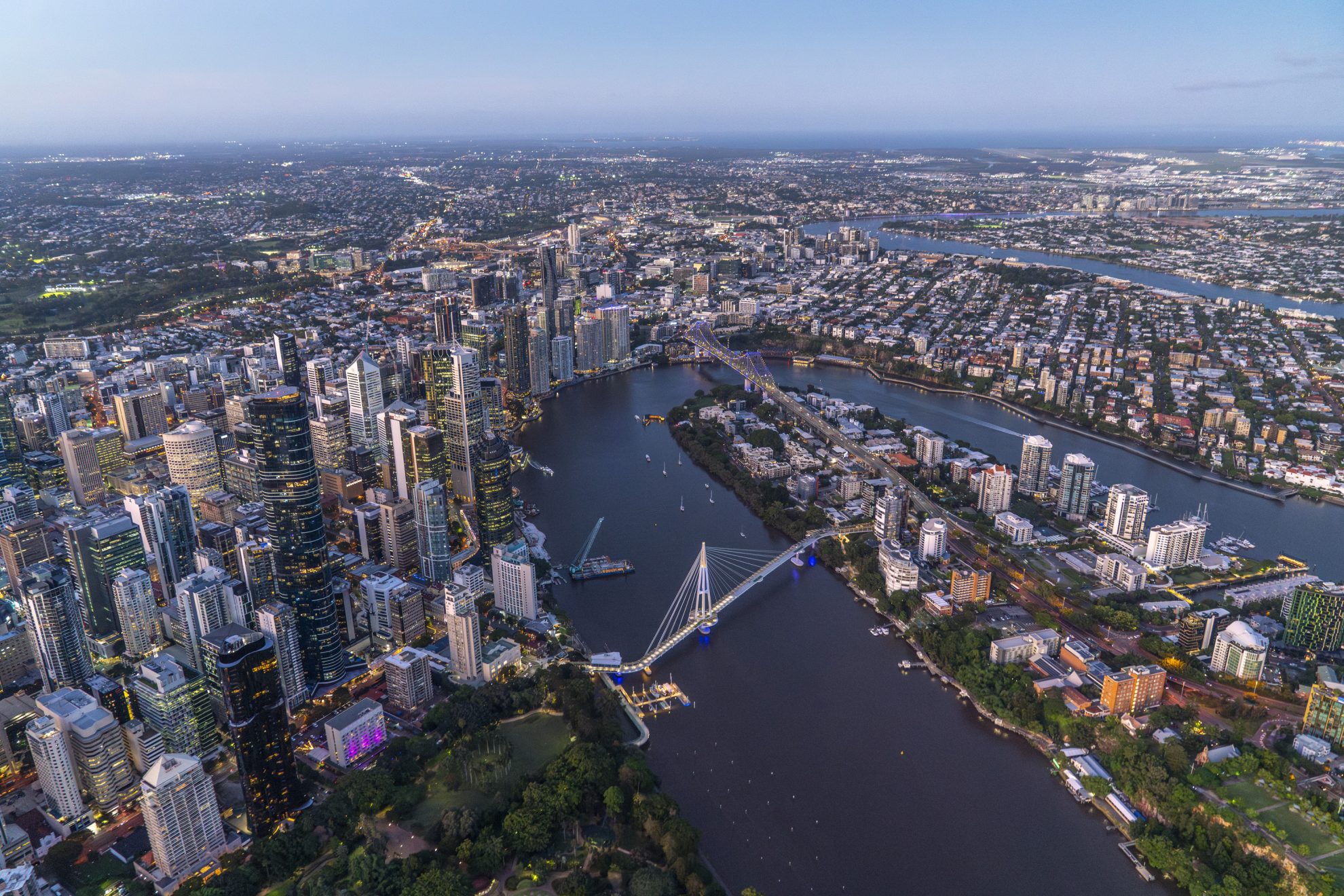
Brisbane has long been celebrated as the ‘River City’; its identity shaped by the many bridges that span over the iconic ‘Brown Snake’. Yet, until the 20th century, one major link was still missing: a direct connection between Kangaroo Point and the CBD. This crossing was recognised as far back as the 1860s as a vital piece of the city’s growing network, and a vision that would take more than a century to become reality.
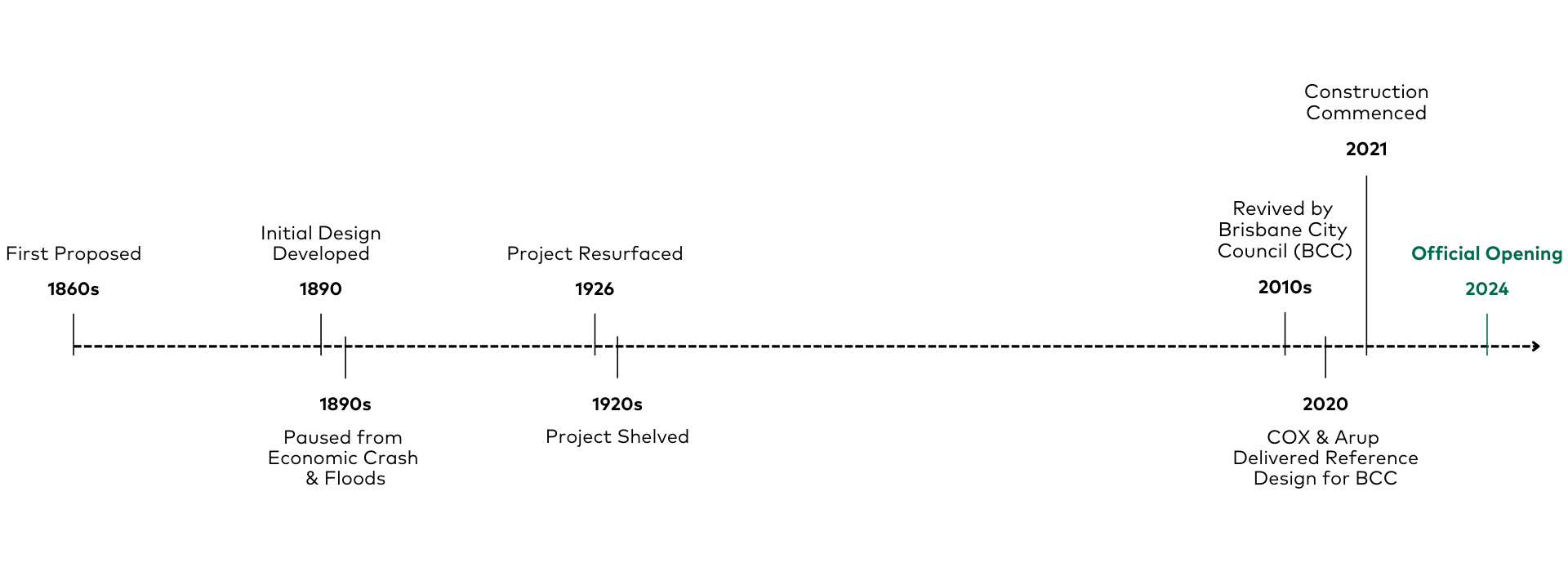
Timeline of the Kangaroo Point Bridge from Proposal to Completion
An initial design for the ‘Central Bridge’ was developed by 1890. However, the economic crash and devastating floods of the 1890s swept these plans away before the idea resurfaced briefly as a feature in the 1926 Cross River Commission Report. Ultimately, the decision was in favour of the Story and William Jolly Bridges only, and this project was deprioritised and shelved.
After almost a century of lying dormant, the crossing notion was revived in the 2010s by Brisbane City Council as part of the Green Bridges Program – reaffirming their commitment to active transport, public spaces, and Brisbane’s reputation as a liveable river city.
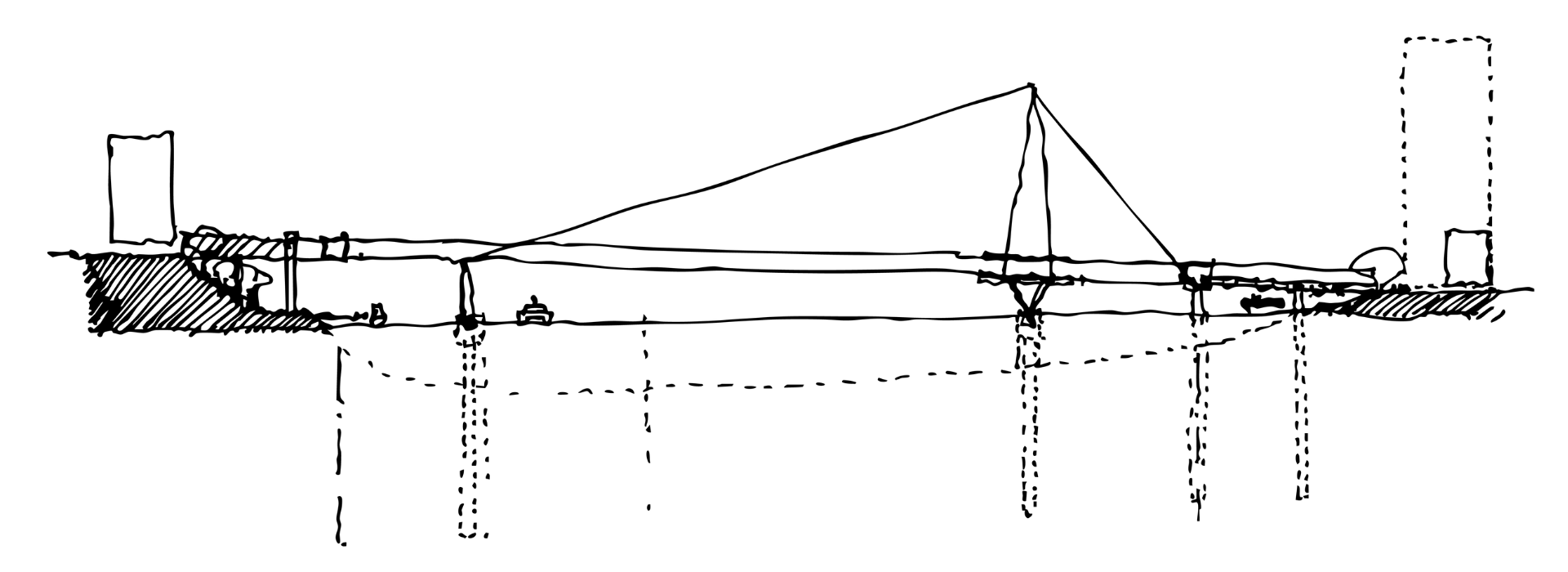
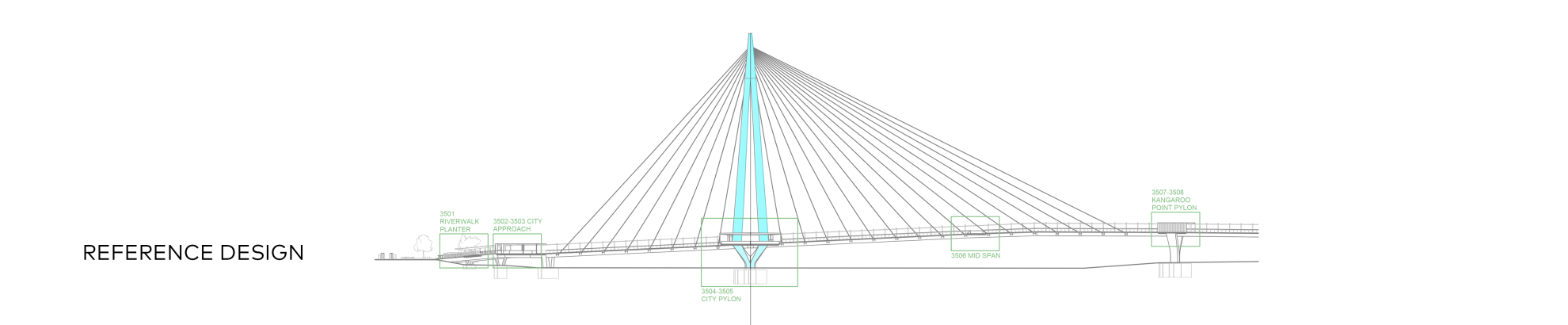
[Above]: Kangaroo Point Bridge Reference Design Sketch
[Below]: Reference Design Render
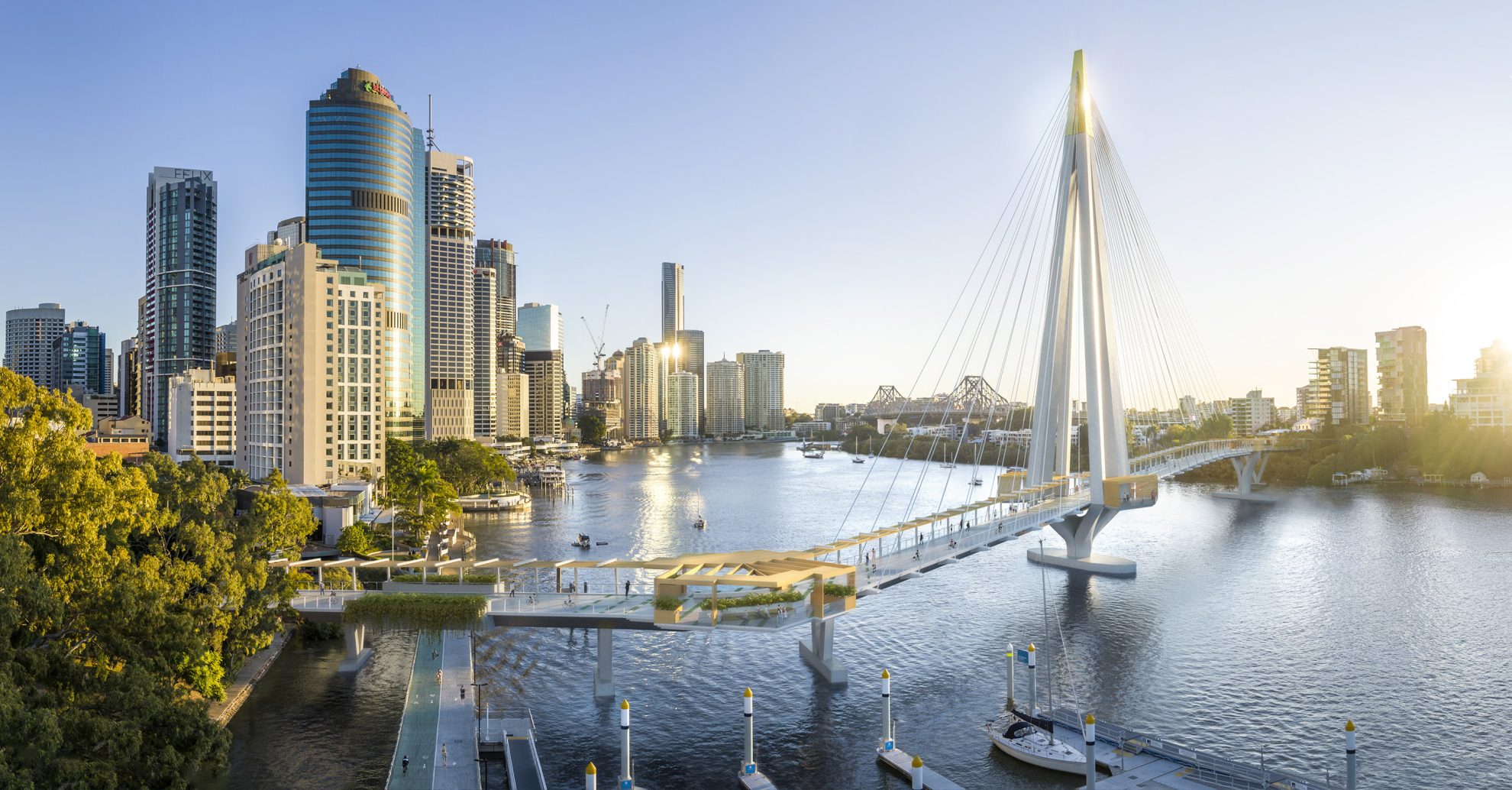
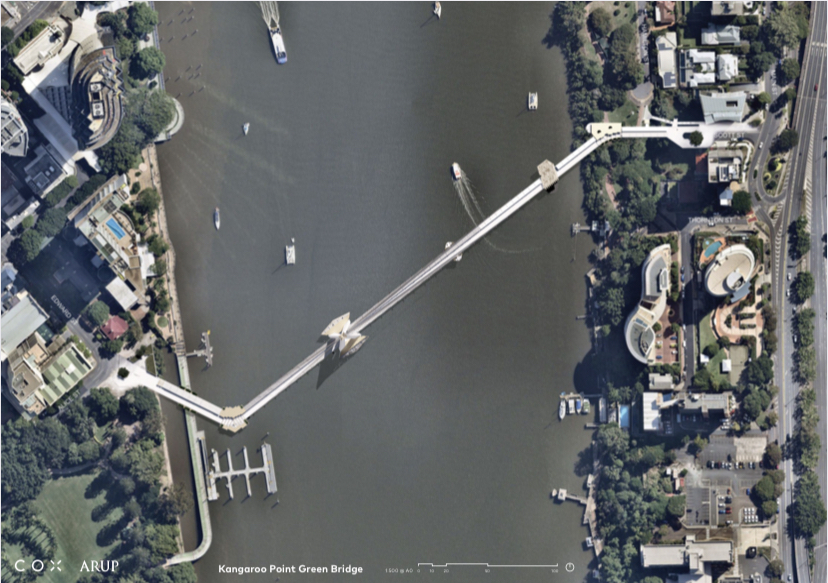
COX, together with Arup, were commissioned to develop the concept and reference design, translating a century-old aspiration into a contemporary, functional, and city-shaping crossing. From the outset, the project sought to realise a long-held dream of the city.

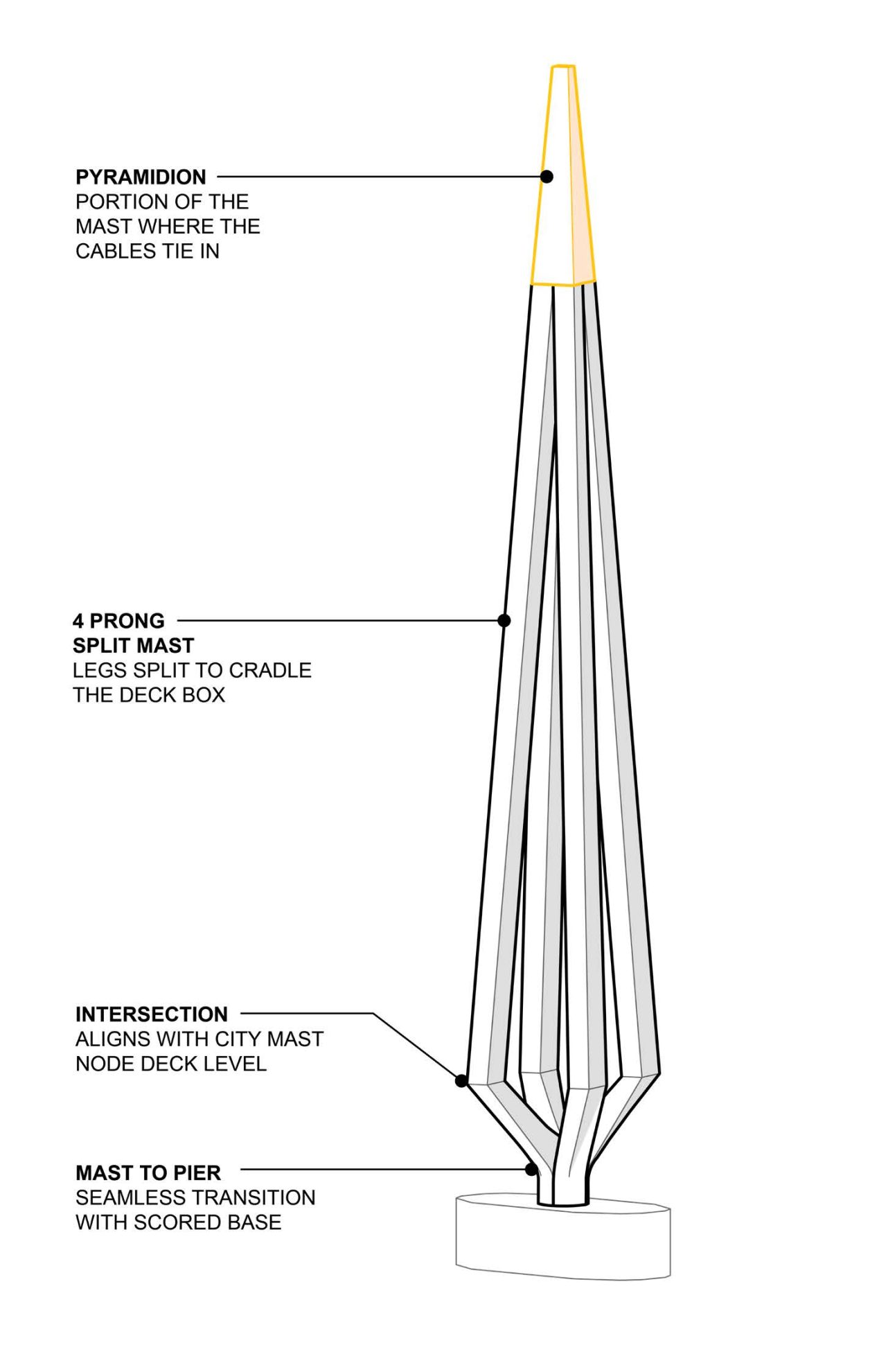
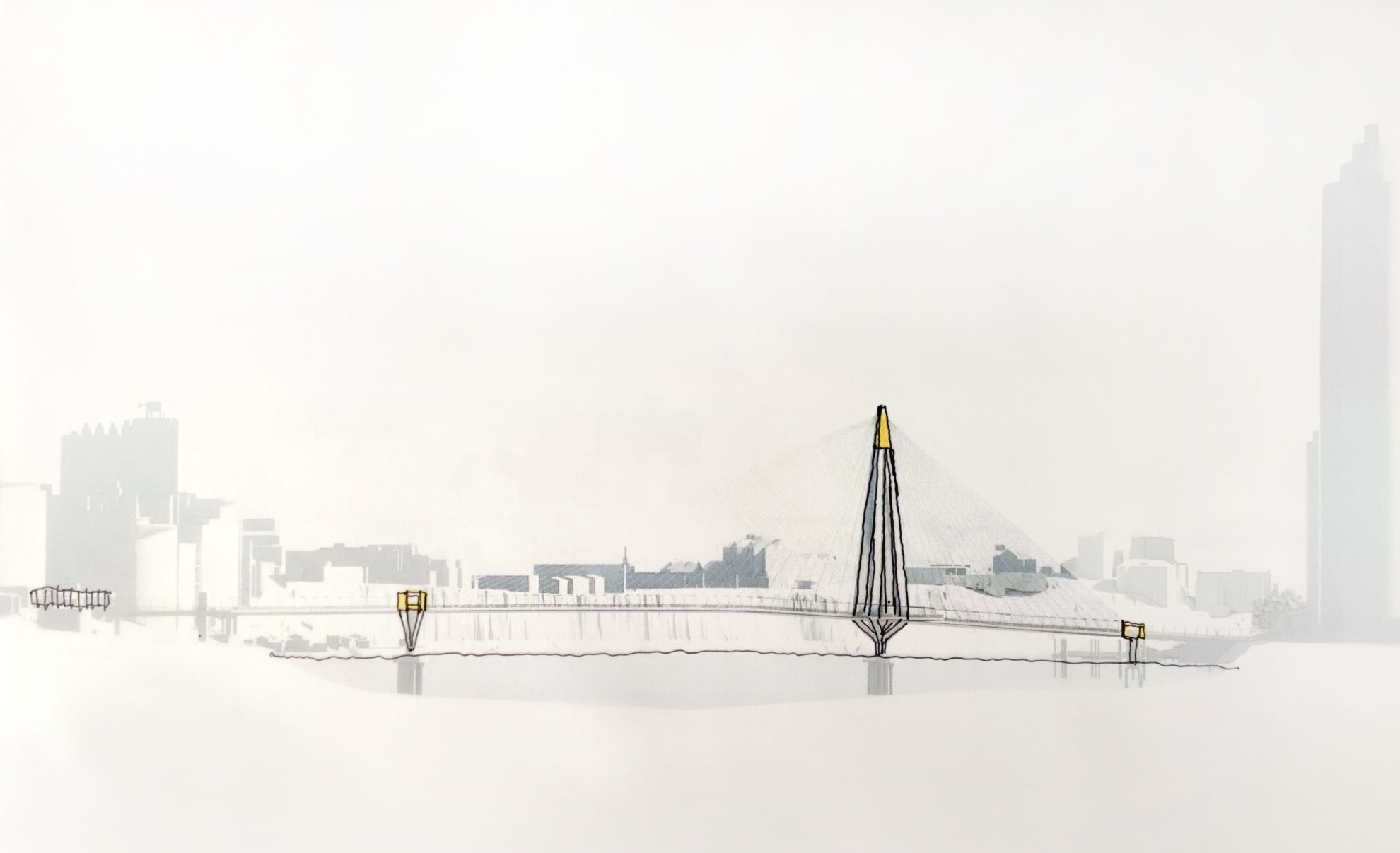
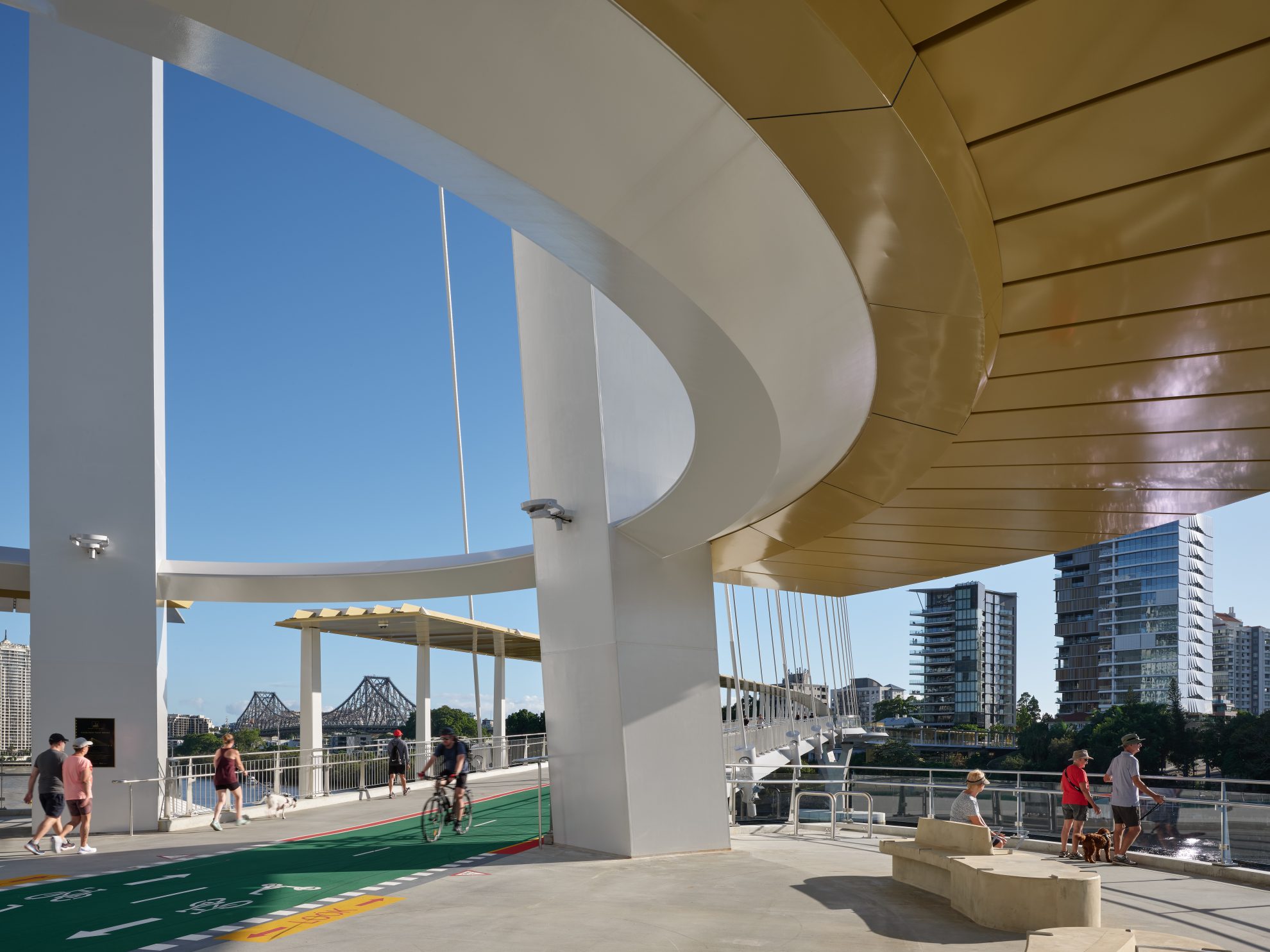
The reference design established the bridge’s location, landings, alignment, and defining form: a single, elegant, four-legged mast supporting a slender deck that spans across the river. The design team envisioned the bridge as a series of “threaded jewels” suspended above the water, offering moments to pause, rest, and take in the city from new perspectives. The four-legged mast provides a cradle to view the Story Bridge, the CBD, the Botanic Gardens and Kangaroo Point Cliffs. The design transformed a long-discussed connection into a city-making project, enhancing Brisbane’s active transport network, strengthening the public realm, and celebrating the city’s subtropical lifestyle.
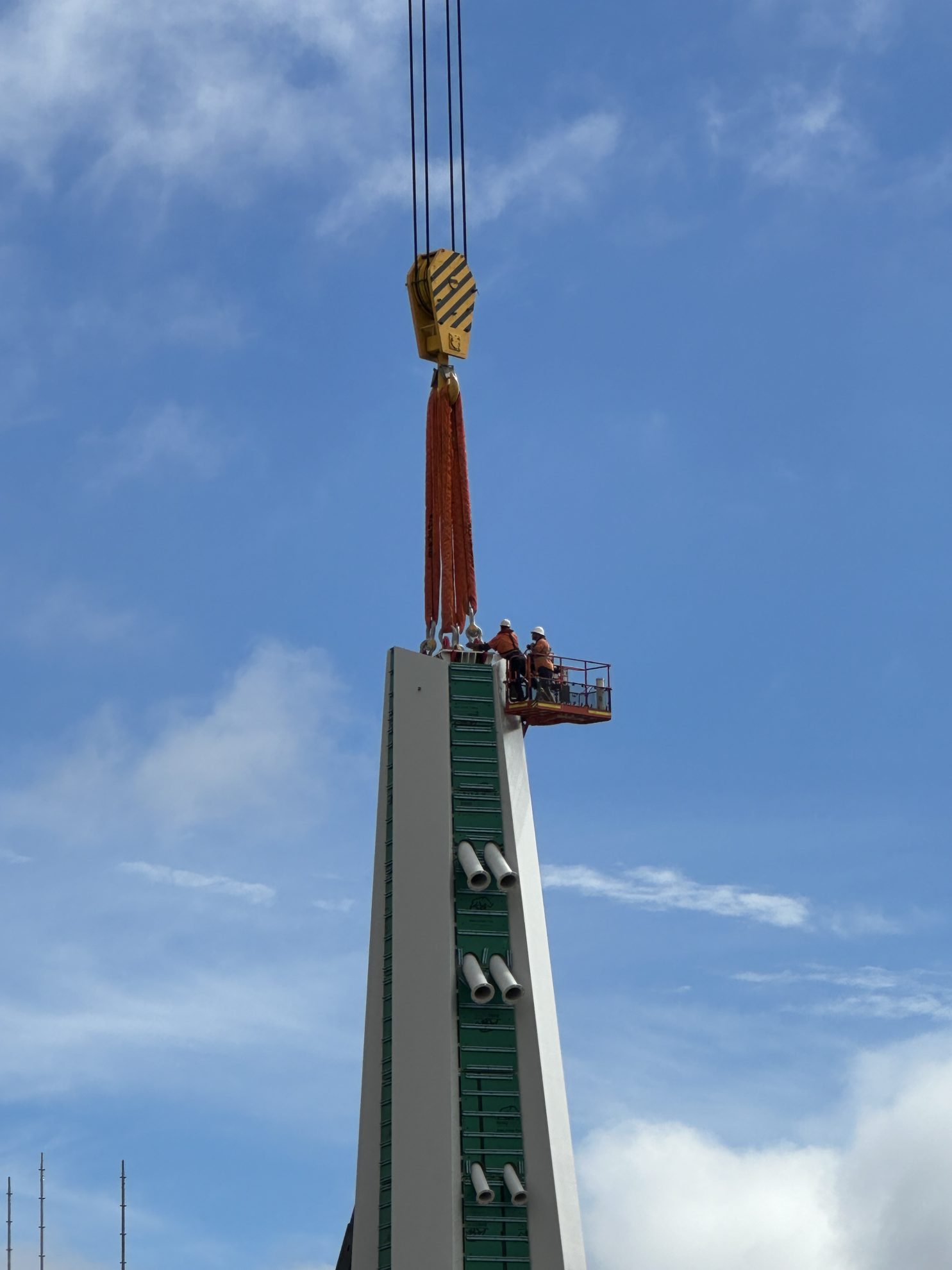
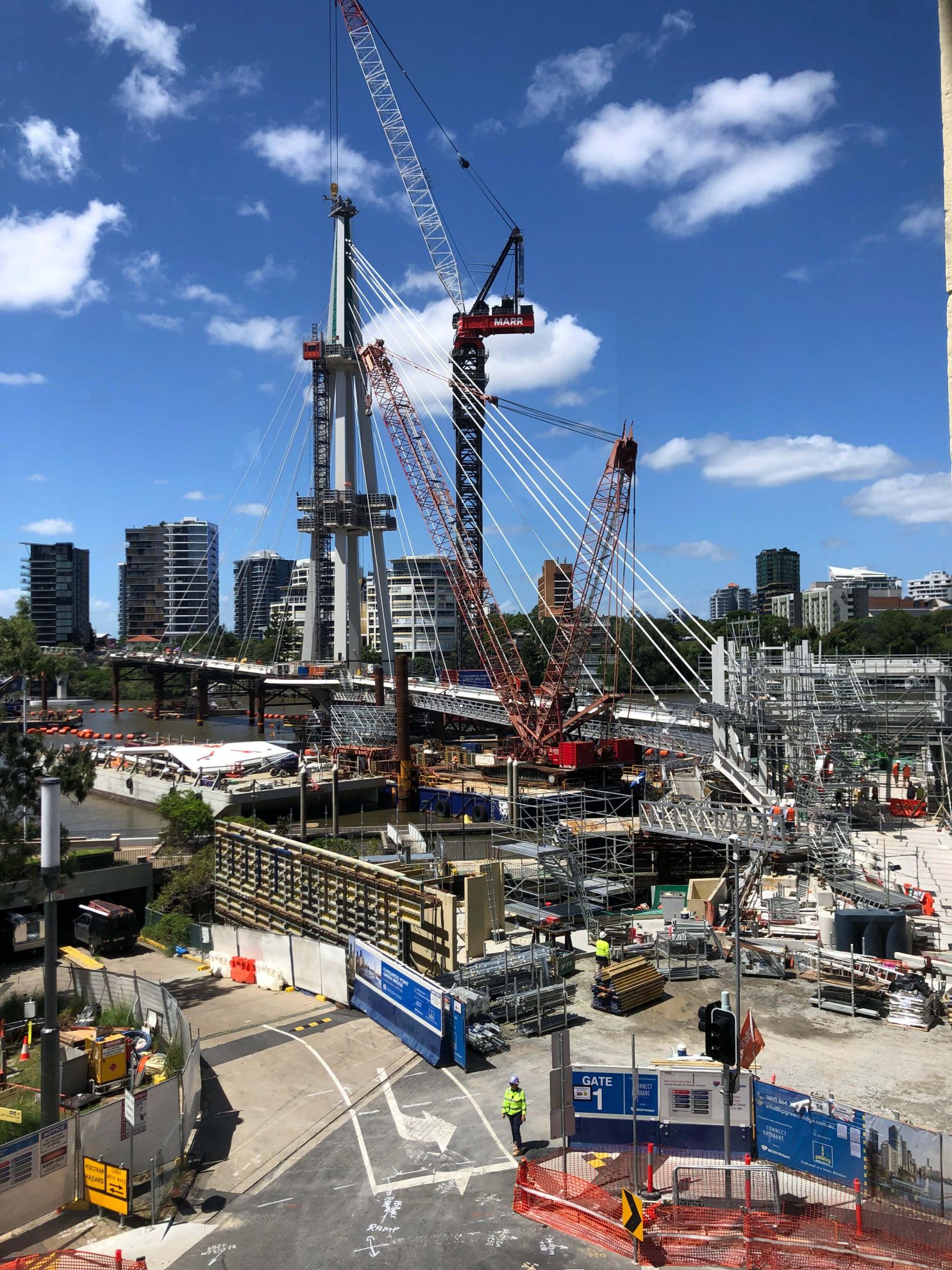
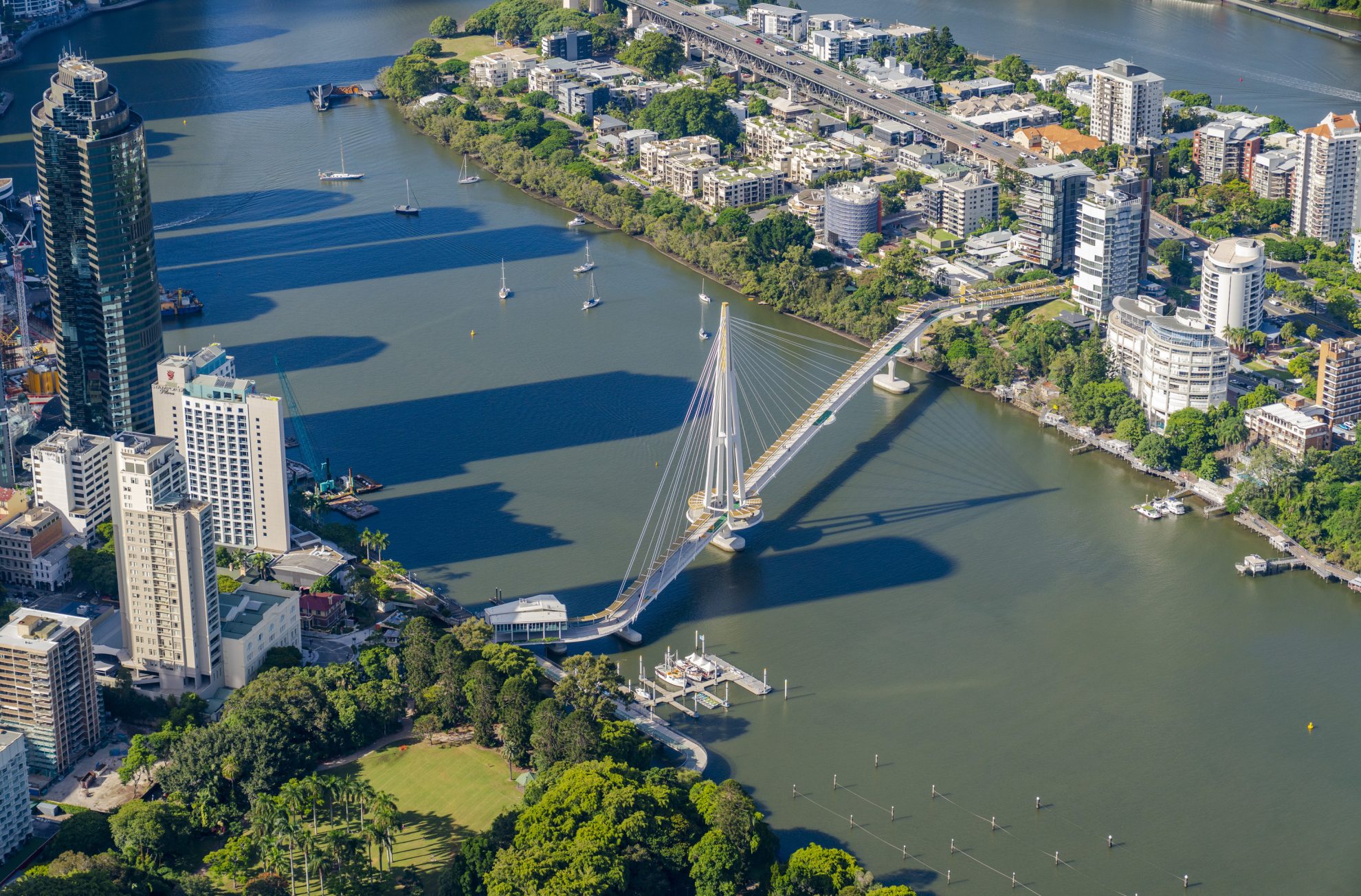
Construction began in late 2021 and was once again paused for almost 6 months due to the flooding of 2022. More than 1,800 people worked on the bridge, totalling 760,000 hours of construction work as crews assembled eight deck spans and a 95-metre mast – the tallest bridge in Queensland. The mast was lifted into place using the world’s strongest tower crane, highlighting the scale of the project. The deck sits 12.7 metres above the Brisbane River, supported by 32 cables stretching 3.5 kilometres, with ten barges working on the river during peak construction.
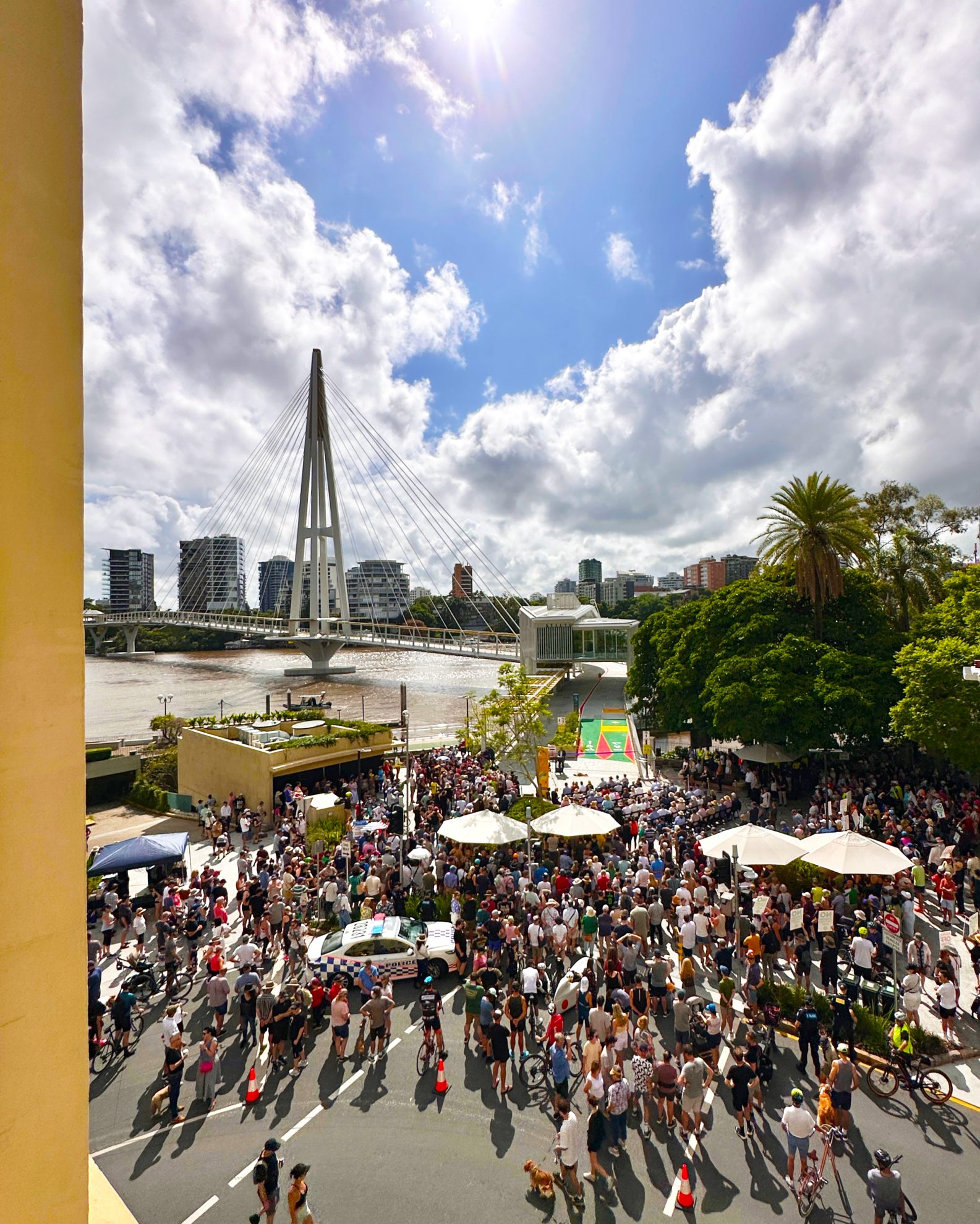
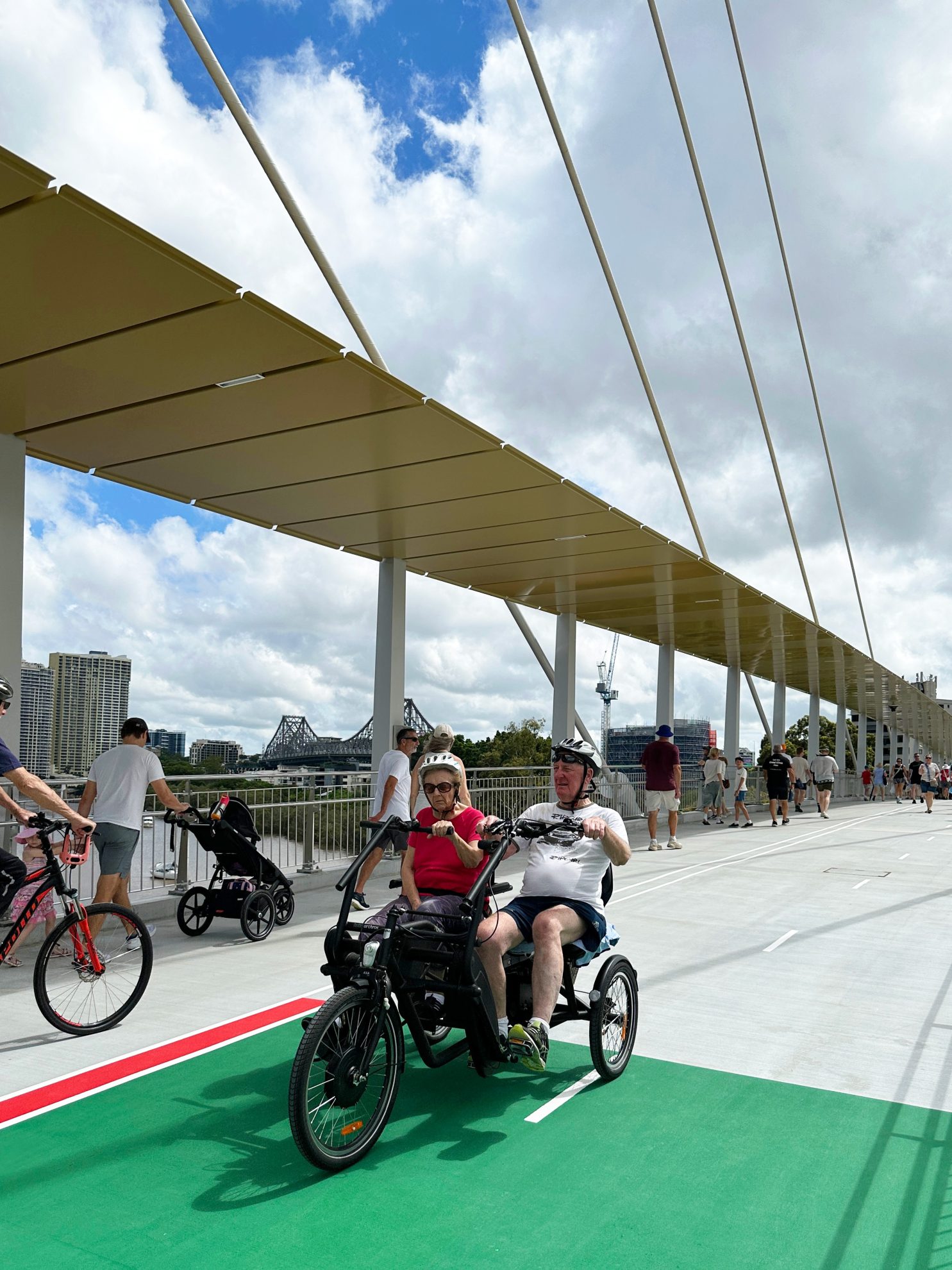
When it opened on 15 December 2024, Brisbane locals and visitors were finally able to take their first steps onto a crossing imagined way back in the 1860s. For the first time in the city’s history, Kangaroo Point was directly linked to the CBD. Initial forecasts estimated the bridge could remove 84,000 car trips from the road each year, while walking travel times were cut by up to 50 per cent, saving commuters up to 15 minutes, or up to 30 minutes for pedestrians travelling from Kangaroo Point and the Gabba to the CBD. Early usage exceeded these forecasts by 75 per cent, with more than 315,000 people crossing in the first month alone.
A year later, the 460-metre bridge stands as both destination and connector, with 3.4 million trips since opening, fulfilling a vision that spanned generations. It is now – and will continue to be – an essential part of daily commutes, weekend meanderings, and a new vantage point to experience Brisbane and its iconic ‘Brown Snake’.
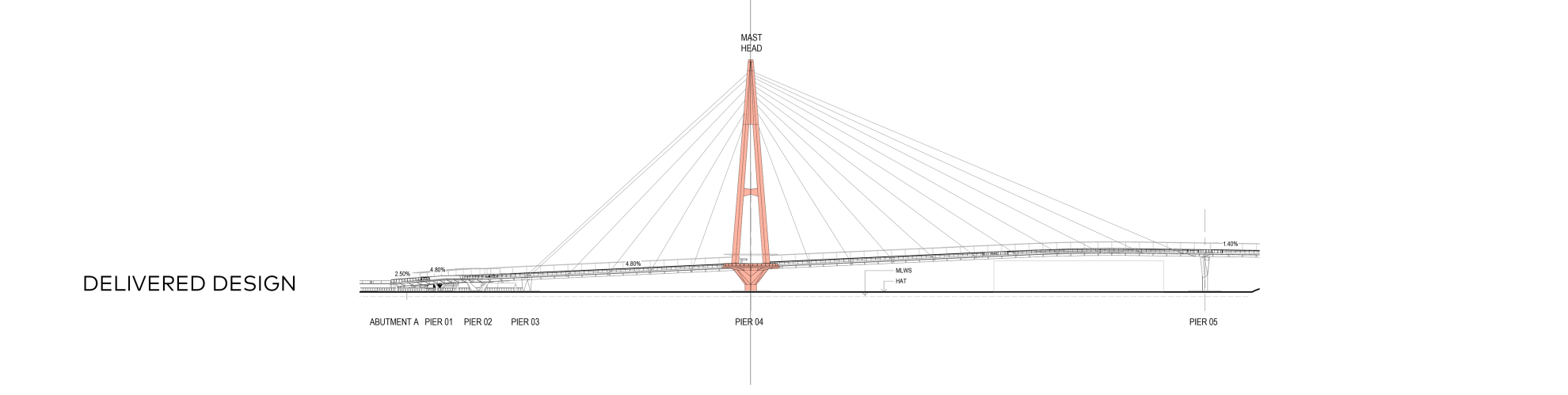
COX are proud of our contribution to the project and delighted the delivered design was able to retain the ambitions of the project.
The Kangaroo Point Bridge project was led by Brisbane City Council, with the large team including:
Client: Brisbane City Council
Principal Contractor: BESIX Watpac
Embedded Specialists: Rizzani de Eccher, Tensa
Engineering: WSP, RWDI
Architecture and Design: Blight Rayner Architecture, Dissing + Weitling, ASPECT Studios, Right Angle Studio, Blaklash, UAP
Communication and Stakeholder: Rowland
Concept and Reference Design: Brisbane City Council with Arup and COX Architecture