PERSPECTIVE: Cultural Institutions as the Infrastructure of Belonging
Karin Ke, Associate at COX Architecture on how cultural institutions are infrastructure of belonging.
Cultural institutions have always been infrastructure – not of economic efficiency, but of meaning, knowledge and cultural exchange. The library, museum and theatre aren’t amenities layered over a functioning city, they’re part of what makes it function at all.
This was explored at a recent Committee for Sydney panel, Balancing the Books, at the State Library of NSW.
Dr Caroline Butler-Bowdon presented the State Library’s 2026 research on usage statistics and choice modelling: data that quantified what ahs long sensed but rarely articulated: that the community benefits of libraries substantially outweigh their investment costs – not marginally, but decisively.
Treasurer, Daniel Mookhey’s candour was notable: he acknowledged that the report tried to quantify things that resist measurement: belonging, wellbeing, the slow transmission of knowledge between strangers. And rather than treating that as a limitation of the data, he treated it as an argument for the investment itself. Every dollar invested gives back four times worth of community benefit.
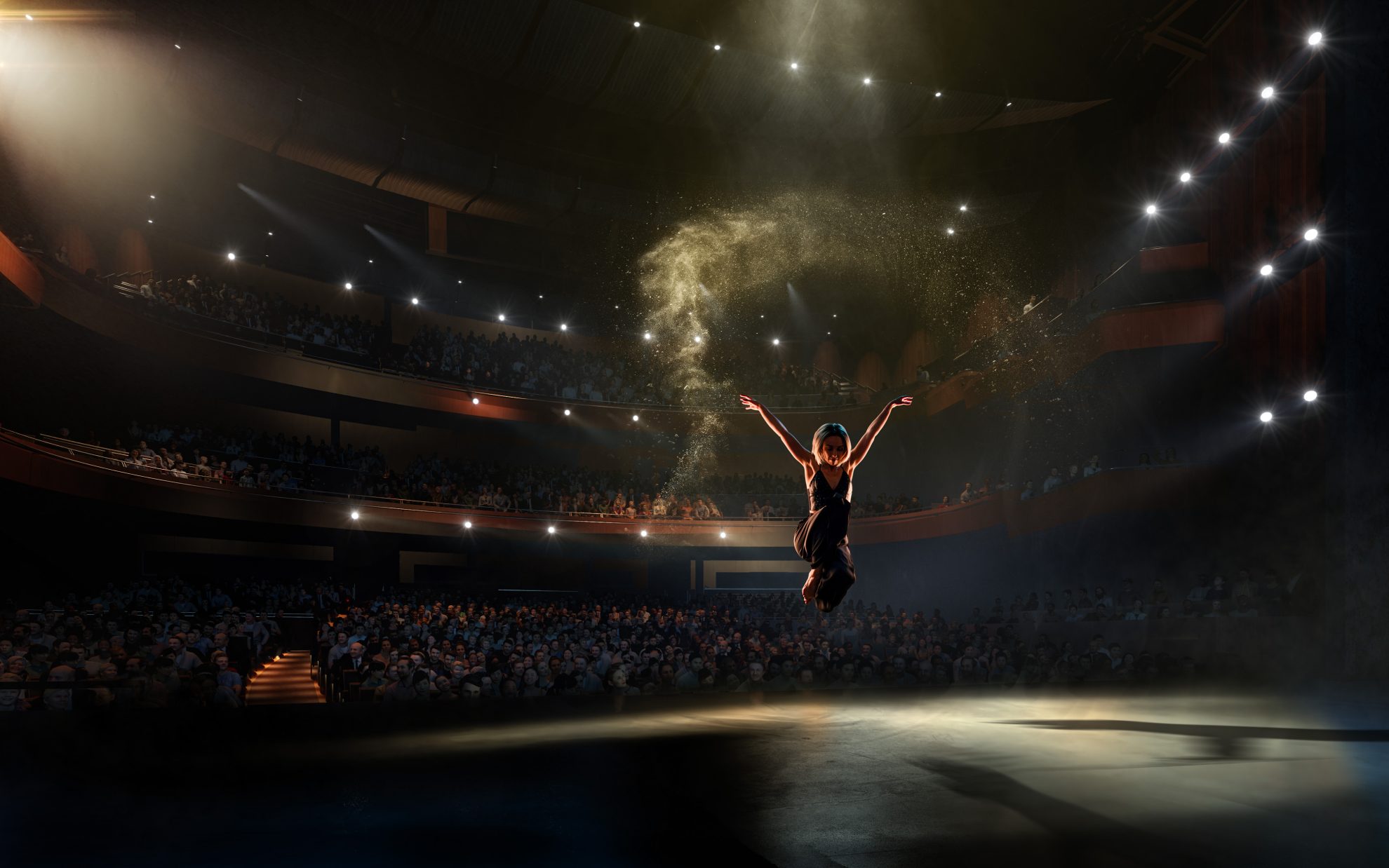
While libraries make knowledge publicly accessible, theatres extend a similar civic function in the realm of shared experience. Projects like the renewal of Riverside Theatres and Canberra Theatre feel particularly urgent in this context, not simply as upgrades, but as reinforcements of civic life.
This investment signals a broader recognition that the value of theatres lies not only in what happens on stage, but in their ongoing capacity to sustain a city’s cultural continuity. In renewing these long-standing venues, the life and relevance of something already embedded in the city’s cultural consciousness is extended.
Theatres are part of how a city understands itself: supporting local production, welcoming international touring, and providing an enduring platform for ceremony, education and shared experience.
The same can be said for more temporary forms of cultural infrastructure that activate the city in different ways. The Biennale of Sydney, for example, creates places for encounter, exchange and shared experience – where architecture becomes a framework for participation.
Mayor Darcy Burne spoke to a persistent misconception in how we talk about cities. Infrastructure – transport, utilities, housing – is often positioned as the real work of city-building. Cultural institutions sit apart: aspirational, desirable, but ultimately discretionary. We need to rethink that sequencing.
Cultural institutions have always been infrastructure. In a society of increasing urban fragmentation where people share postcodes but not experiences, cultural institutions become the connective tissue. They are spaces where disparate backgrounds and perspectives meet on equalised ground. Where the individual comes and leaves having been, briefly, part of something larger.
These aren’t just soft values. They are stabilising forces.
And for those involved in shaping these spaces, we influence which stories get held, which behaviours feel possible, which communities feel heard. Every threshold we draw involves harmonising these decisions.
As we connect to stakeholders of these spaces, the successful cultural spaces that endure are not the ones that impress on opening day. They are the ones people return to, without occasion, to sit, gather, reflect, to simply be. That quality of return, of a space becoming part of someone’s life may be the most honest measure of architectural success we have.
Perhaps the measure of impact is not what we build but what we make possible.
The session closed with a reminder of what these institutions enable: places where communities form themselves up, where shared memory is kept, where the democratic act of free thought and exchange is given a physical home. Hearing this articulated, and valued, at a policy level felt both rare and significant.