PERSPECTIVE: The Stage Endures
COX Associate Mark Kowalyov reflections on the SportNXT summit, in the week Melbourne made history.
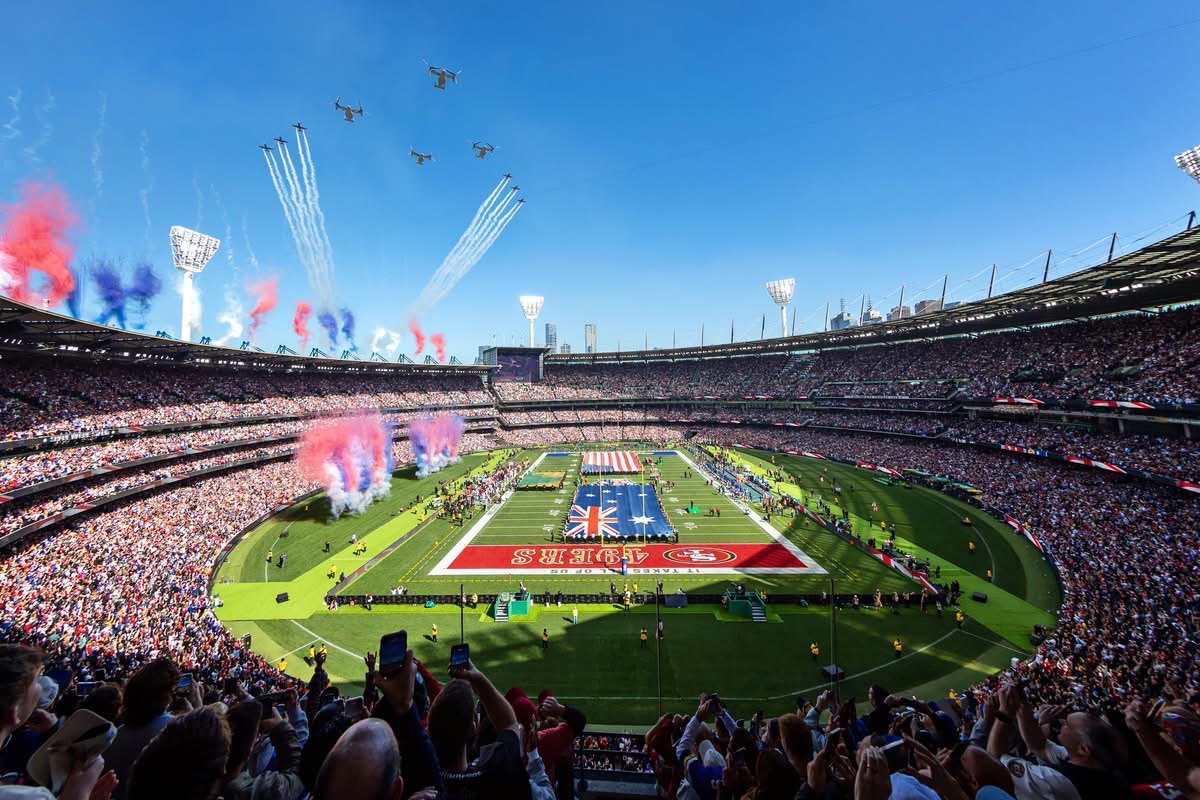
Last week, Melbourne did something it had never done before. As the Los Angeles Rams and San Francisco 49ers ran out onto the MCG for Australia’s first-ever NFL regular-season game, the city added another chapter to a sporting legacy that already runs through the Australian Open, the Formula 1 Grand Prix and the AFL Grand Final. It was a fitting close to a week that opened with SportNXT – the southern hemisphere’s leading sports-business summit, gathering global leaders to ask where sport goes next.
Across two days of speakers from Australia, New Zealand, India, Japan and the United States, one thread kept returning: sport is, by its nature, an emotionally charged business, built on the connection between communities and the heroes who represent them on the field. Staying across global trends still matters, but so does remaining agile enough to act on what each market demands, to work with nuance within the complexity.
Technology and media play critical roles within the sporting landscape, however the deepest bond between a club and its community still stems from a physical place, the proverbial home to gather. These buildings of steel and concrete have to hold that connection for thirty to fifty years, through a future no one can predict. That’s the challenge. It’s where the abstractions of vision meet the reality of a fixed asset, and it reframes the context of questions the conference raised.
For venues, ‘iteration’ rather than ‘innovation’
Innovation is the word everyone reaches for when we talk about designing venues. But venues aren’t apps. They’re physical assets built from tangible materials, far less agile and far more expensive to reinvent. So what does innovation mean for the coliseums of today and the venues of tomorrow? How do we chase the next breakthrough without losing sight of what the present moment demands?
Iteration is perhaps the better lens. Progress rarely comes from dramatic shifts pulled from the void. It comes from the steady accumulation of improvements on strong foundations. You can’t predict the next opportunity, but you can be ready when it arrives, to feel the wave just before it breaks.
That readiness means knowing intimately venue design well enough to adapt existing systems in new directions, rather than reinvent them entirely. Venue planning should be measured in decades, not years: long-term vision to set the direction, annual adaptation to ensure relevance.
The discipline: the bravery to be risky, but not reckless
Sport is, surprisingly, a risk-averse industry. But designing for its future often requires making bold, but informed calls: that is the essence of any decision measured in decades. So how do you bet boldly, without gambling the connection you’re building for?
Listening to leaders like Kevin Demoff (Kroenke Sports & Entertainment), Takayuki Hioki (Cerezo Osaka / Japan Football Association) and Rajesh Menon (Royal Challengers Bengaluru), a clearer picture emerged: it’s critical to have a vision, built on an honest read of today’s culture, yesterday’s traditions and the broader economic forces at play. From there it’s about moving forward while staying adaptable to shifts along the way. For Royal Challengers Bengaluru, the “Play Bold” statement is a test for real decisions as much as it is a slogan. For Cerezo Osaka, community is the driver: treat the venue as the host and the team as the bullhorn to the wider community, and the club becomes a facilitator, connecting the right commercial partners to the community it serves.
The sharpest framing came from Kevin Demoff: the line between risk and reckless. Risk is a step in a direction that isn’t solely backed by data but is rooted in a belief about where things can go. Reckless is being faced with the data, and the stop signs along the way, and choosing to ignore them anyway. For a venue that will outlast the careers of everyone who commissions it, that distinction is everything.
This is the space COX has worked in for decades, designing venues around the world. Through it, we’ve learned where the technical foundations lead to accomplishing the vision: foundations built for resilience, serving the present while reaching towards the future. Because these venues endure. Long after headlines fade, the MCG will be standing, the stage on which the next once-in-a-generation moment plays out.