International consortium of architects unveils designs for a world-class sports enclave in Amdavad
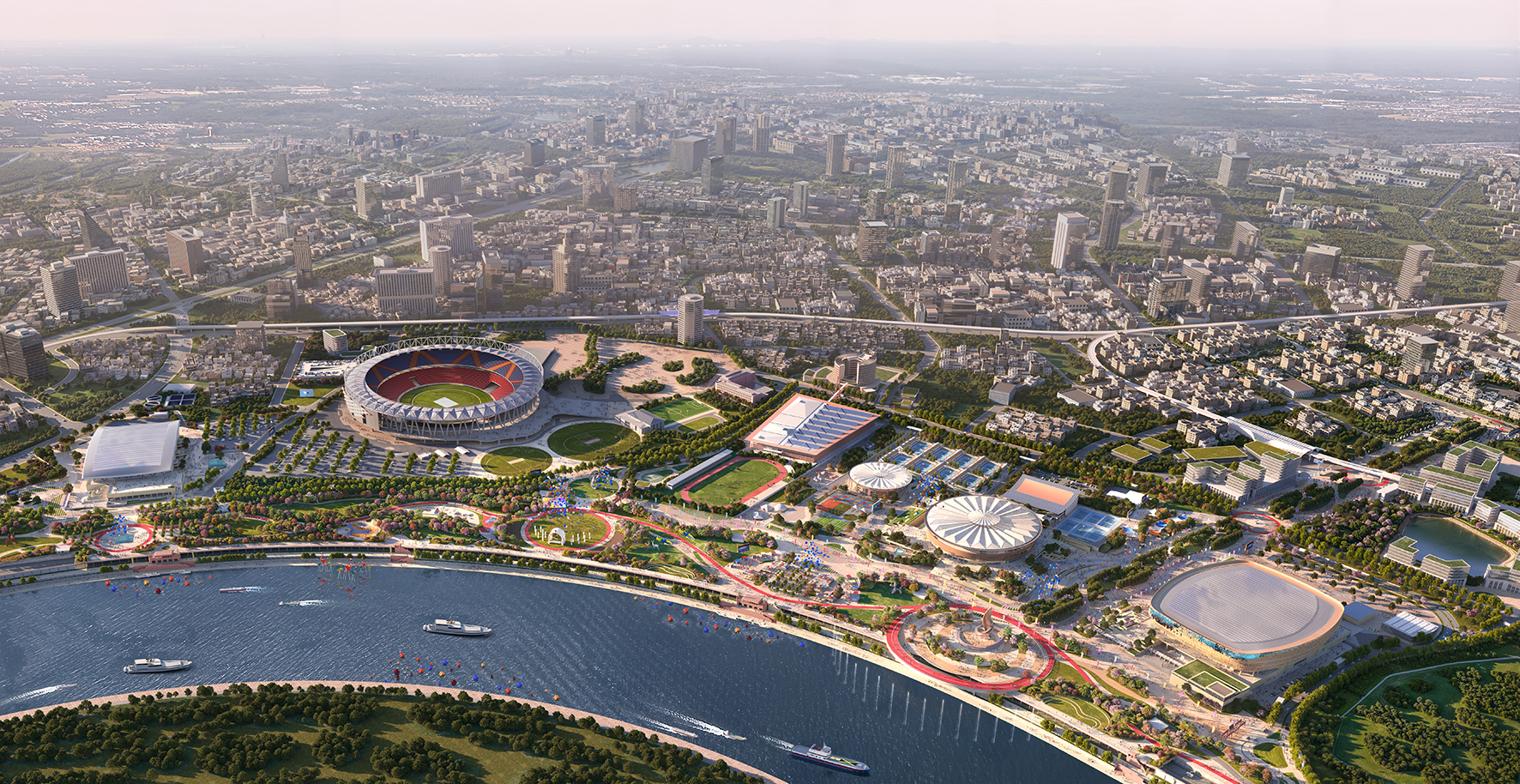
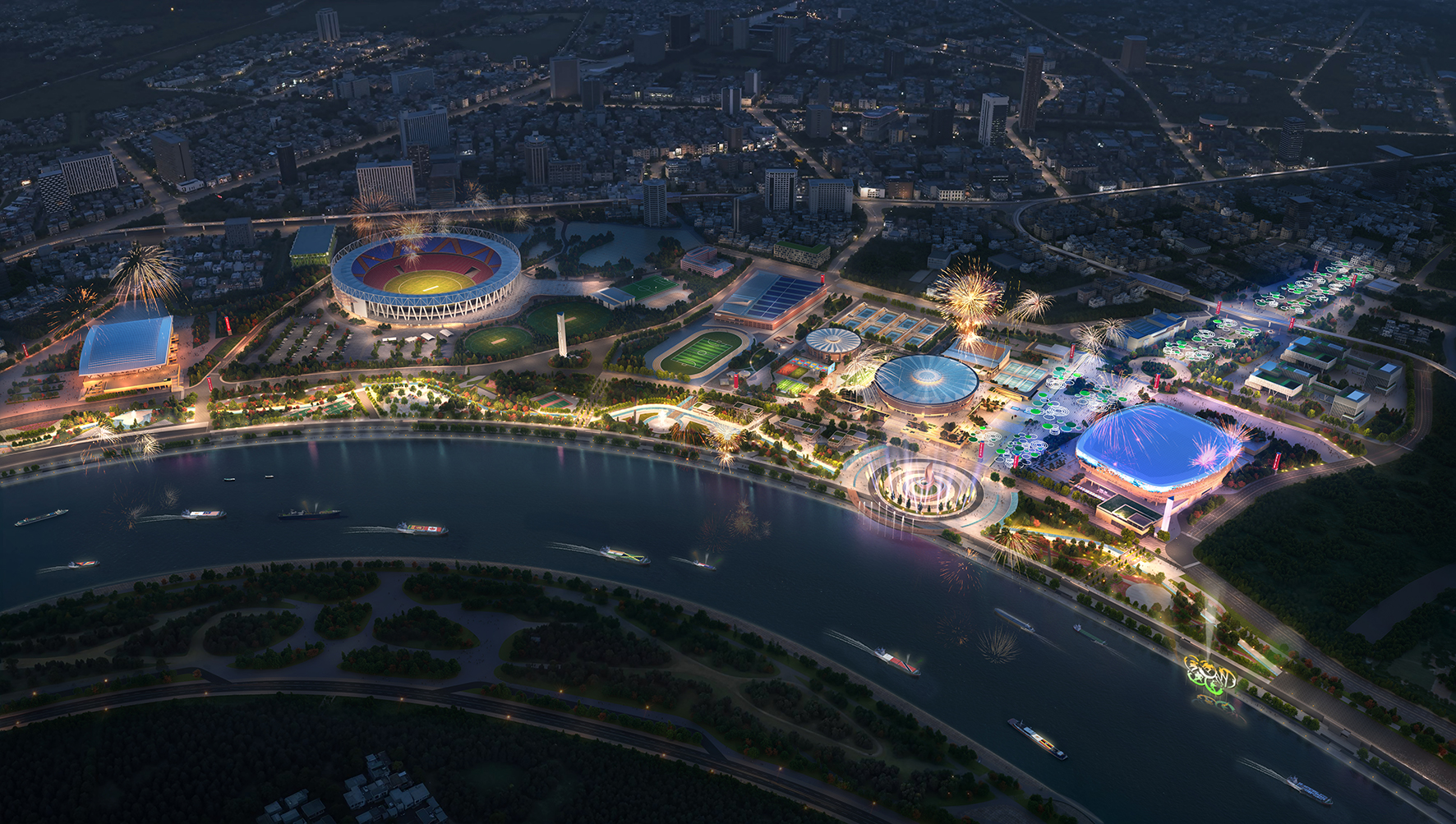
Designs for an ambitious, 350-acre masterplan for the new Sardar Vallabhbhai Patel Sports Enclave at the heart of Amdavad have been unveiled. A design consortium of BDP, Cox Architecture and Collage Design is shaping a vibrant new district where world-class sport meets community life, blending international expertise with the cultural richness of Gujarat.
Situated beside the Sabarmati River, the enclave will become India’s newest city park offering recreation and social amenities to the people of Amdavad.
Like Le Corbusier and Louis Kahn’s seminal works in Amdavad that inspired B. V. Doshi and Charles Correa, the new enclave weaves tradition and modernity into a world-class precinct that reflects India’s growing ambition to combine global sports with community-focused development, bringing socio-economic growth to its cities. With the Commonwealth Games Federation naming Amdavad as the host city for the Commonwealth Games centenary event in 2030 and Gujarat confirmed to host the 2029 World Police & Fire Games, the design signals the city’s emergence as India’s premier sports capital. These events will help to enhance infrastructure development, generate significant investment and business opportunities and create more than 20,000 jobs in the hospitality and retail sectors in the city.
The masterplan is guided by four guiding principles: climate responsiveness, integration with nature, architecture that is modern yet authentic, and a sustainable legacy for the city. Centred on a green boulevard and anchored by the iconic, 132,000-seat Narendra Modi Stadium, the plan integrates Commonwealth Games-ready facilities with plazas, gardens, and climate-responsive streetscapes. Three major venues – the International Tennis Centre, an Indoor Arena, and an Aquatic Centre – together with a National Institute of Sports Excellence, are framed by stepped landscaped podiums that balance security, scale, and Gujarati architecture traditions. A mandala grid and lush greenery provide year-round comfort and highlight the entrances to each venue.
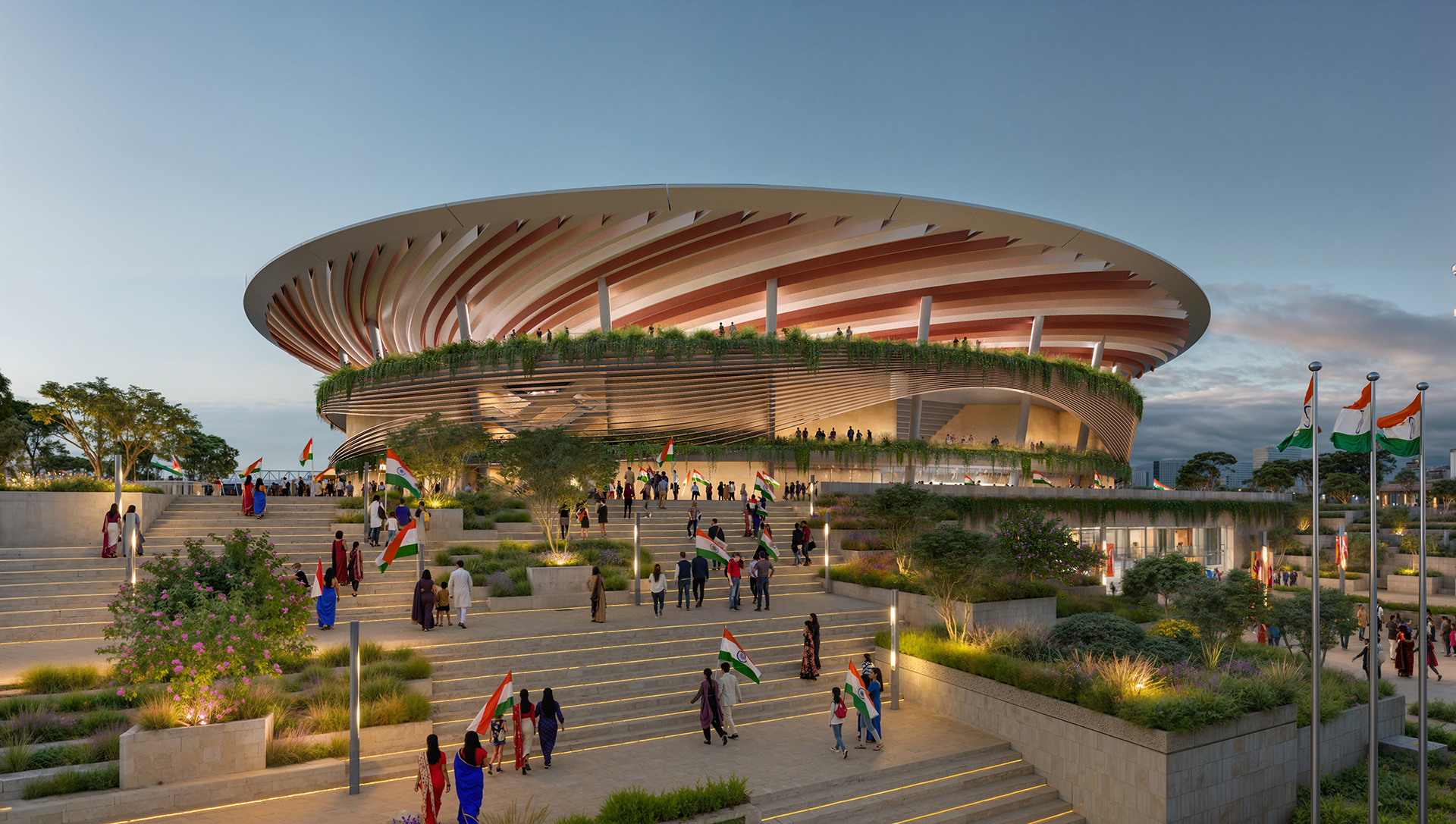
[Above: Tennis Centre]
At the centre of the enclave, a new Tennis Centre, the first of its scale in India, will feature a 10,000-seat centre court, 5,000- and 3,000-seat show courts, and eight match courts. A floating fabric roof and suspended soffit provide shade while allowing natural ventilation, and shaded balconies with planted edges offer views of the river and surrounding matches. A fan plaza will connect all courts, creating an energetic focal point for spectators. The tennis centre will also transform into a tennis club with indoor and outdoor tennis courts, hospitality venues and other ancillary uses.
Nestled between the new International Tennis Centre and the Narenda Modi Stadium is the new National Institute of Sports Excellence. This new sporting ashram will become the centre of training for India’s next generation of sports stars. The complex includes training halls, gymnasiums, recovery equipment and bio-medical facilities to be used by the athletes and coaches.
[Above: Indoor Arena]
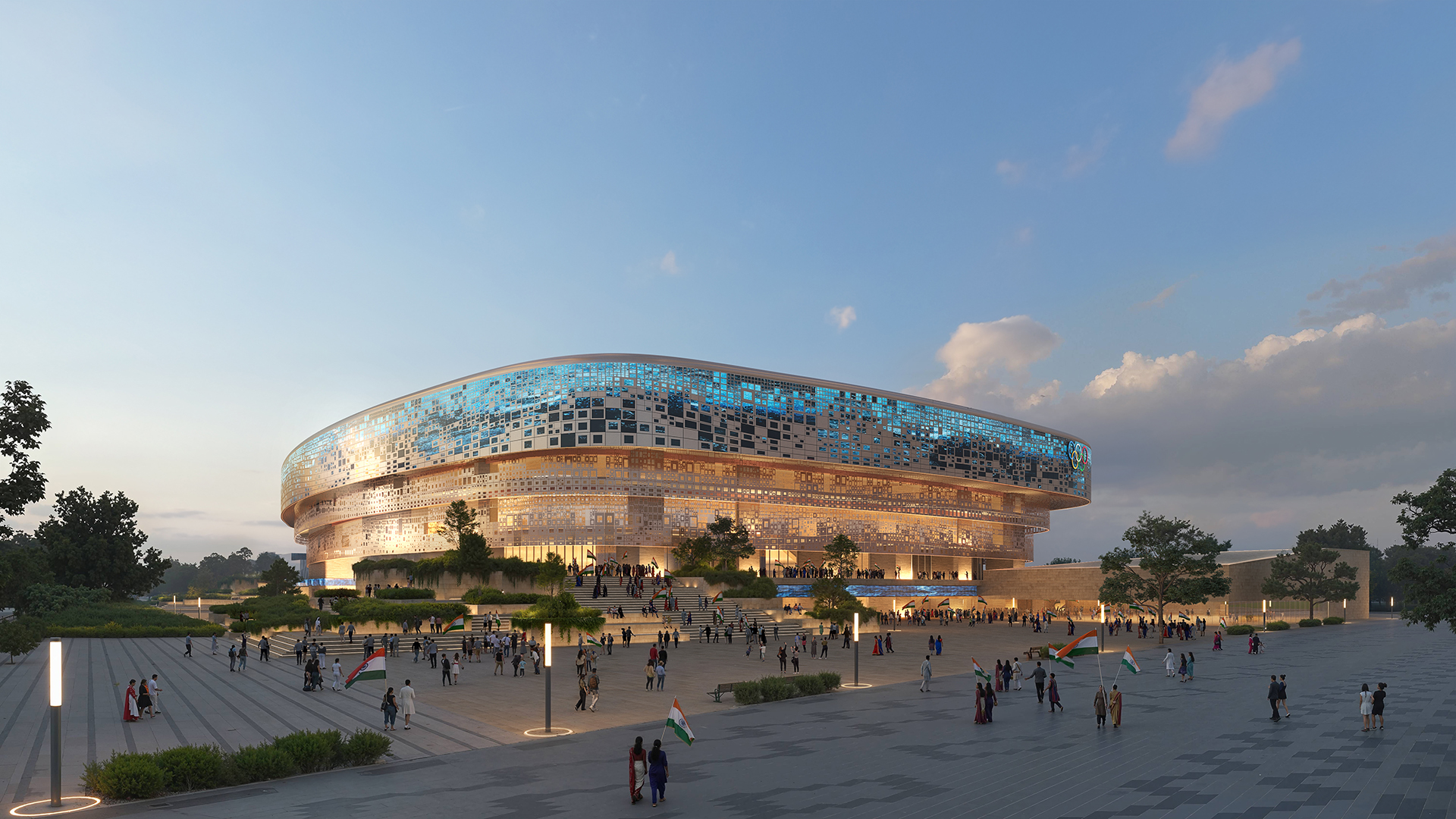
At the eastern end of the SVP Enclave is the new 18,000 seat international indoor arena, making it the largest indoor arena of this scale in India. Designed to international standards for gymnastics and basketball finals, this venue will also go on to host concerts, family entertainment as well as kabaddi and other sports. Facades clad in bronze anodised aluminium jali screens reference traditional jharokhas and chhajjas, providing both cultural depth and environmental protection.
To the west of the SVP Enclave next to Modi Stadium is the new Aquatic Centre seating 12,000 spectators during major tournaments and reducing to 4,000 post-event. Following consultation with international sporting federations, the centre will be designed to meet international event hosting standards for world-class swimming, diving and synchronised swimming and will also serve the community as a learning and leisure pool. An exposed exoskeleton, double-glazed curtain wall, overhanging roof and coloured glass louvres ensure the centre has both visual impact and passive climate control. The lantern-like form recall the floating sky lanterns of Diwali on the Sabarmati River.
The riverfront itself will be transformed into a central Games Plaza, envisioned to host ceremonial spaces for mega sporting events and later evolving into a vibrant public destination with dining, community sports courts and an urban park for year-round use by Amdavad’s citizens. The biodiverse park will act as a “green lung” for Amdavad, hosting national and international events while remaining open to all year-round.
Manisha Bhartia, Urbanism Director and Head of BDP India, which is leading the masterplan, explains the ambition: “Our vision for the Sports Enclave is to create an inclusive, sustainable and distinctly Indian destination for world sport. By drawing on Amdavad’s architectural traditions and blending them with cutting-edge design and technology, we are designing-out single use, sporting venues that decay over time. We are shaping new, visually beautiful places that will host the world’s greatest sporting moments, but also remain an active, vibrant part of the city’s everyday life for decades to come.”
[Below: Indoor Arena]
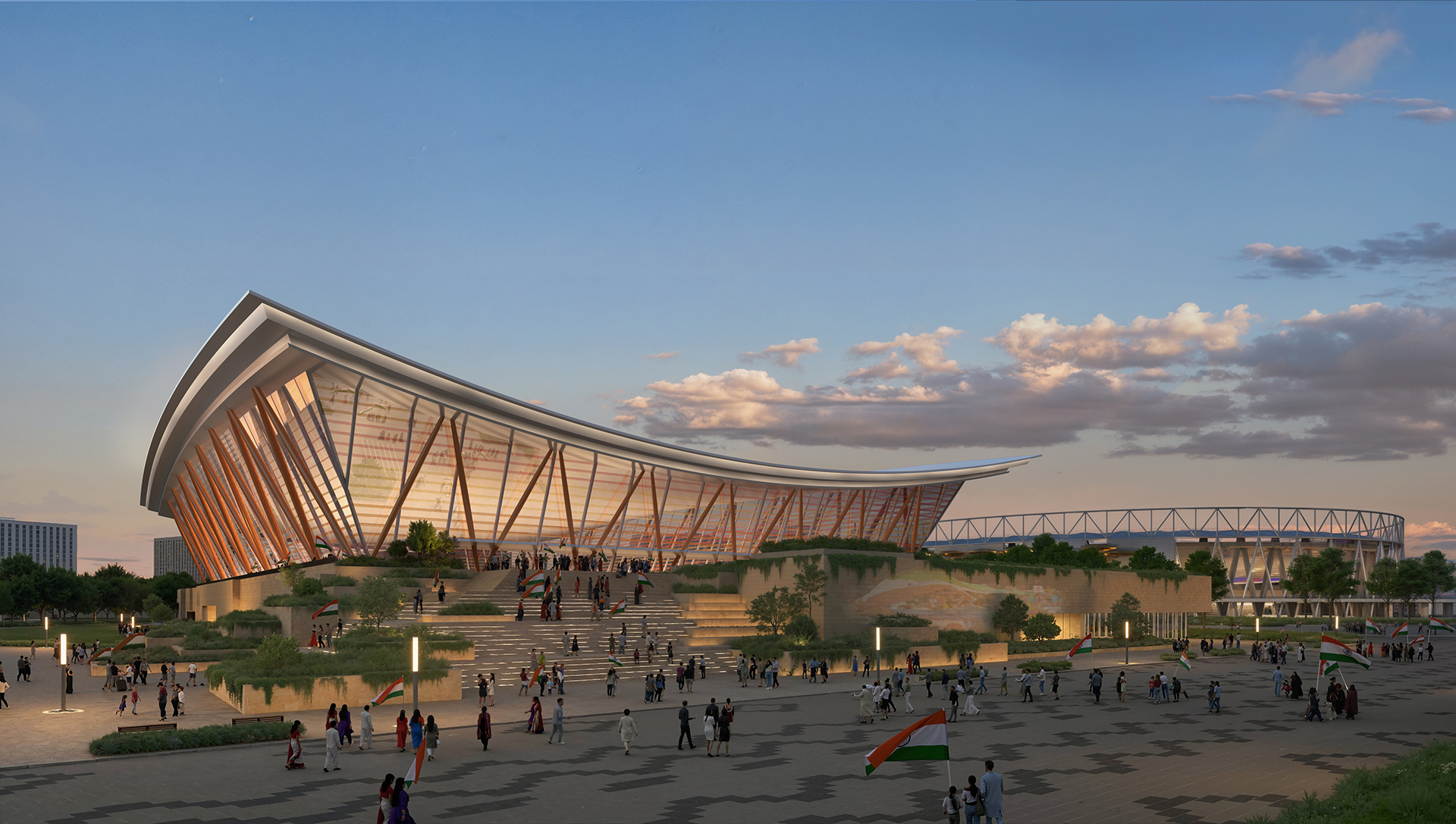
Alastair Richardson, Director of COX
The rich architectural response, building on Indian modernity and tradition, has created a truly unique design full of meaning and context that will make a lasting experience for global sporting events as well as a legacy that goes beyond such events. This new public park and associated architecture will place Amdavad on the world stage for many years to come.
Ramkumar Subramanian, Director at Collage Design, added: “In continuation of our efforts to deliver sustainable sports infrastructure in India, the SVP Enclave will act as a shining example of our commitment towards developing iconic projects with a vision towards financial viability, inclusivity and integrating sports into the fabric of the community.”
The consortium’s vision offers a bold new model for how major sporting events can elevate a city, creating a destination for the world while leaving a lasting legacy for its citizens.