PERSPECTIVE: Natural selection: connecting workplaces to living systems
Samantha Ellinson, Associate Director, Interior Design at COX Architecture, on designing workplaces that work with, rather than against, our biological nature.
Biophilia in workplace design is often discussed as a wellness strategy: a way to reduce stress, lift productivity or soften the impact of long hours at a desk. The research supports this. Spaces aligned with ecological systems improve how we feel, how focus, and even how we relate to one another. But treated seriously, biophilic design asks something more demanding of architecture. It asks workplaces to reconnect people to the living systems they are part of, not separate from.
Most of us will spend more than 90,000 hours of our lives at work. Yet offices remain among the most ecologically disconnected environments we inhabit: sealed, static and divorced from the rhythms, textures and sensory variation that our own biology evolved alongside. That disconnect affects how we experience time and attention. For designers, this raises a question of responsibility rather than style: how do we design workplaces that support people as biological beings, while deepening their connection to the world around them?
Biophilia offers a framework for addressing this challenge. The Living Future Institute defines four modes through which nature can enter the built environment: direct nature, indirect nature, spatial conditions, and place and culture. Together, they move biophilia beyond potted plants and green walls towards a deeper alignment between buildings, bodies and ecosystems.
The view from inside – nature as an equitable resource
When workplaces allow people to orient themselves in time and space, they support concentration in a way no artificial solution can replicate. Direct nature, or exposure to natural light and subtle changes in temperature, helps regulate circadian rhythms, sleep, mood and even cognitive performance.
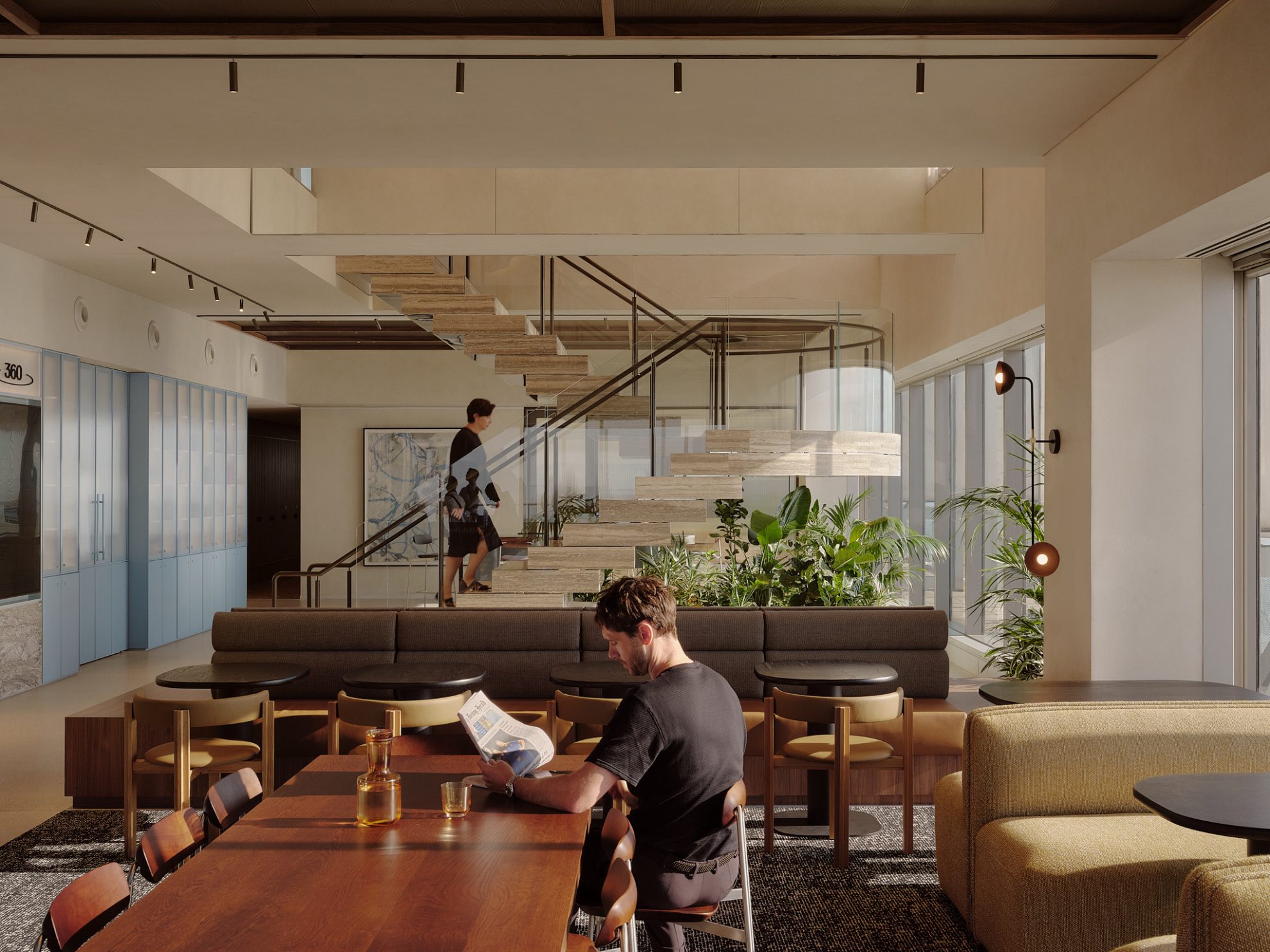
In our recently completed new workplace for Australian law firm, Mallesons, one of our guiding principles was treating natural light and views not a privilege reserved for leadership; but as a shared resource where every occupant has access to daylight, outlook and the seasonal changes throughout the workday.
Refuge in high-stimulus environments
Contemporary workplaces often demand constant interaction and pace – high stimulus environments where biophilia can play a critical counterbalancing role.
For Intuit’s Sydney office, we introduced a network of quieter, softer spaces encompassing organic forms, textile richness, enclosed niches and overhead planting. These zones were designed as places to recalibrate, environments that allow the nervous system to downshift when the pace of the day accelerates.
Here, biophilia also shaped material decisions. Flooring was produced from waste stone, while wall panelling was designed to minimise off-cuts and eliminate material waste. In this context, biophilia became structural rather than decorative, influencing how the workplace performs over time and how responsibly it is made.
Where nature shifts not just mood, but also behaviour
Indirect nature operates more subtly, working through atmosphere rather than literal reference. Because natural environments are never static, subtle variation in materials, texture and tone creates engagement without overstimulation.
For Mallesons, we drew on a palette informed by the site itself: figured stone, sandy tones, timber and mineral surfaces. These references anchored the interior to its geography and introduced warmth into a corporate typology often defined by neutrality. This shift affects behaviour as well as mood: when a space feels grounded and human, it changes the quality of attention people bring to the space.
When buildings are designed in alignment with natural systems, sustainability follows as consequence rather than a compliance exercise. On this project, the approach resulted in significant reduction in embodied carbon; achieved through spatial equity in daylighting, fully demountable joinery, operable windows and natural ventilation and the deliberate use of existing and second-hand furniture.
Biophilia as a source of inspiration
Post-occupancy evaluation of our design for our own Sydney studio provides a measurable lens on these ideas. Across 88 per cent of physical touchpoints, users reported an improved experience of the workplace.
The single most improved metric was ‘I feel inspired’ – a finding that speaks to something deeper than ergonomics or air quality alone. The studio’s biophilic approach has also contributed to approximately $1 million annually in employee retention.
The work is never finished, but the direction is clear: when human wellbeing and environmental responsibility are treated as the same design question, regenerative workplaces become less an aspiration and more a natural outcome. By reconnecting workplaces to living systems, we are not introducing something new, we’re restoring something essential.