COX VOX: Honouring the Stories of the Land with Saul Roberts
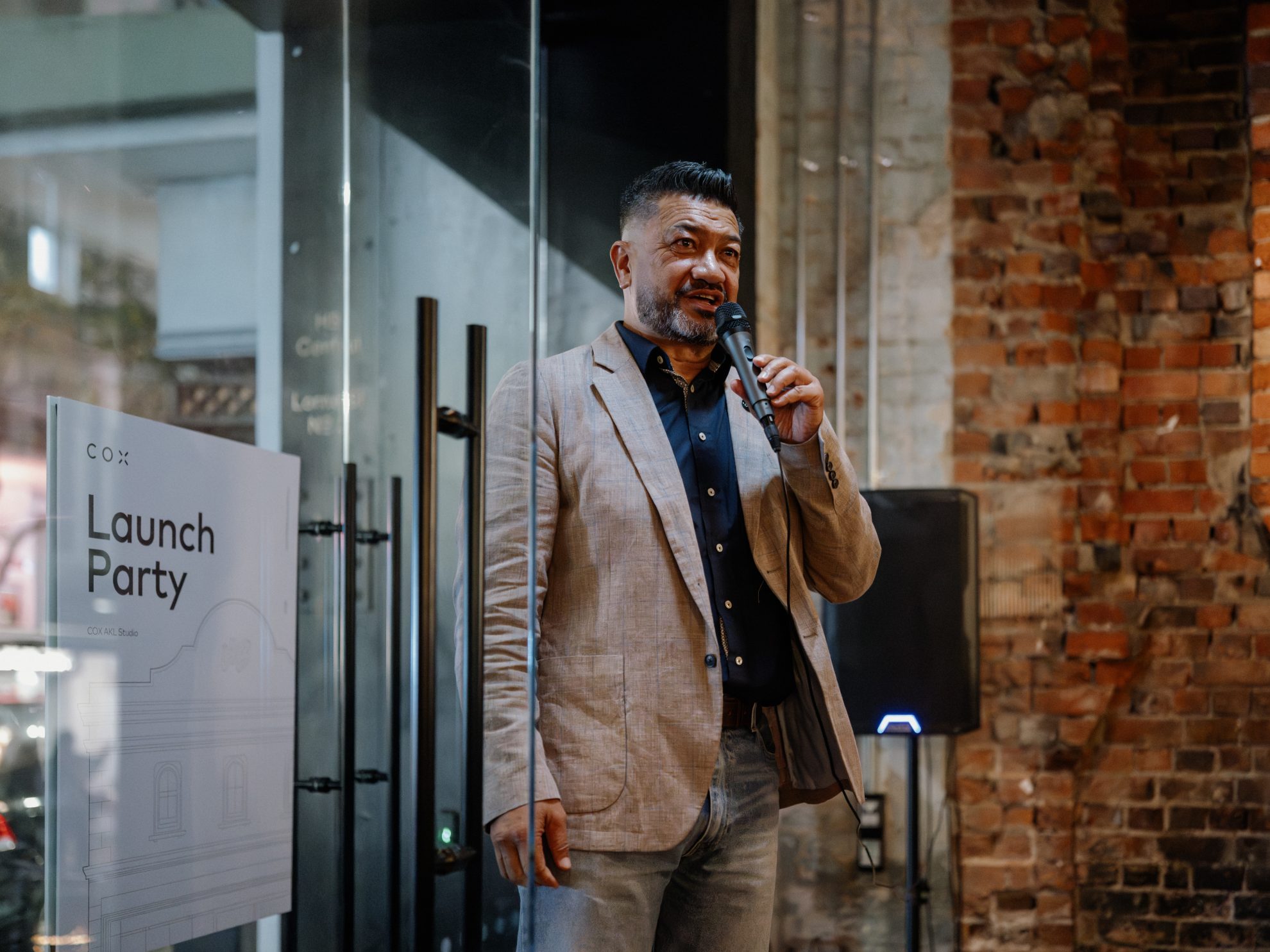
Growing up in the papakāinga (village) of Ihumātao, Saul Roberts watched his father help communities create places where identity, belonging and culture could be expressed. Those experiences would go on to shape his understanding of architecture as an extension of empathy, community and cultural responsibility.
Now at COX, Saul brings that perspective to his role as Pou Kaiwhare, Architectural Designer and Tikanga Māori Advisor, helping ensure projects across Aotearoa respond authentically to the land they stand on and the communities they serve.
Before introducing himself in English, he often begins with a mihimihi – a formal Māori introduction that connects him to the people, places and whakapapa (lineage) that continue to shape his work today.
Saul Roberts’ mihimihi
E noho ana au ki tōku taumata. Papaki mai ana ngā ngaru ō te moana. Tērā Mōkau, kei runga, kei te tonga. Ka anga whakararo ki Te Hiku ō Te Ika. Te Toka Tapu ki Te Rerenga Wairua. Hoki whakamuri mai, ki waenganui tonu. Ko Tāmaki nui kei Te Kei ō Tainui. He kupu whakarite nō ngā tūpuna – Tāmaki Makaurau! Tāmaki herehere ō ngā waka e!
Kia ora tātou. Ko Saul taku ingoa.
English translation of Saul Roberts’ mihimihi
I sit upon the highest lookout of my sacred mountain, watching the waves crashing below. For as I trace the landscape of my ancestors, from Mōkau in the far South to the ‘leaping place of the spirits’ in the far North, to the sacred rock at Cape Reinga, then back to Tāmaki Makaurau (Auckland) – the place where all canoes (and peoples) are bound together.
Greetings to you all. My name is Saul.
We sat down with Saul to discuss the experiences that shaped his path into architecture, the role of tikanga Māori (customs) in design, and how meaningful relationships can create places where communities feel heard, respected and empowered.
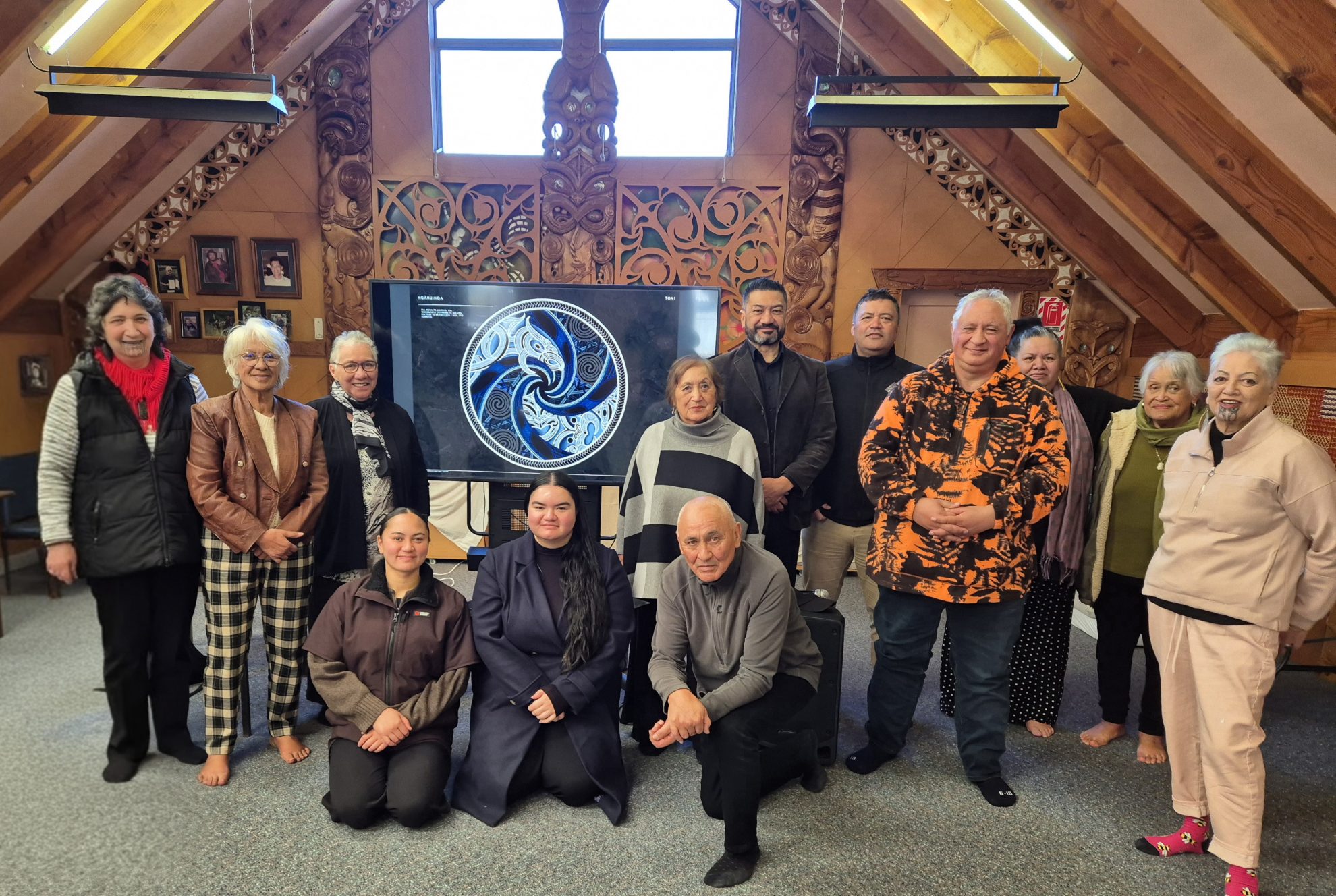
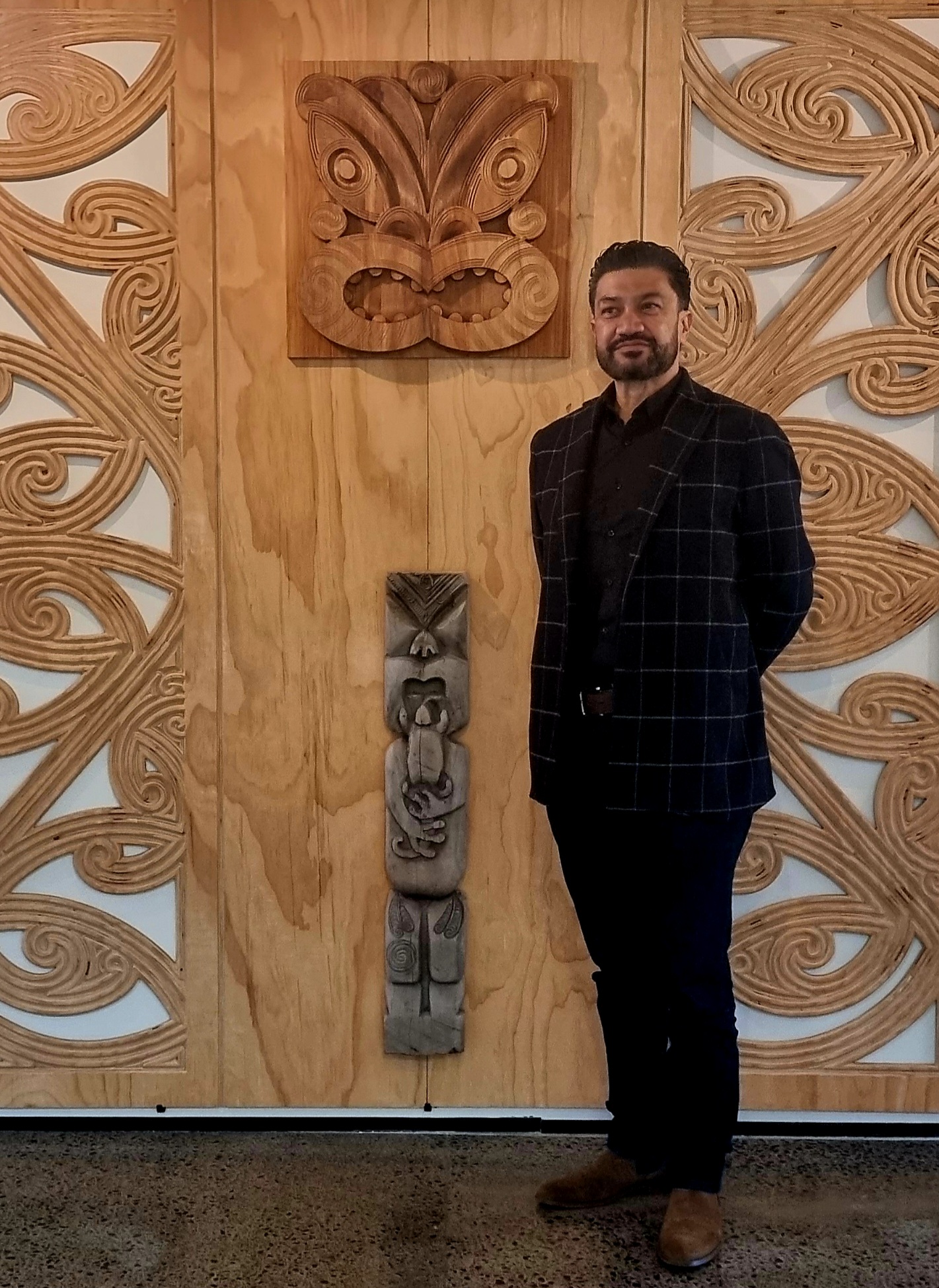
[Above left: Taumarunui Community Kokiri Trust (Morero Marae – Taumarunui) – Māori Health & Medical Centre wānanga | Above right: Dawn karakia opening by Saul Roberts for new entryway (hiki te tapu)]
What shaped your path into architecture and cultural advisory work?
My journey began in Ihumātao, the papakāinga where I was raised on the shores of the Manukau Harbour. Māori is my first language, and my childhood was shaped by our customs, our people, and the responsibilities of village life.
My father – a carpenter and the head of our village – was often called upon by tribes around the harbour to support community building projects. I watched him help both tribal and urban Māori create spaces where identity and belonging could be expressed.
Those experiences taught me that architecture is not just about construction; it is about people, memory and connection. Raised under the guise of a builder and village leader, I was naturally drawn to architecture as an extension of empathy, community and cultural responsibility.
Why does a dedicated cultural advisory role matter in architecture?
For me, a cultural advisory role is not a corporate box ticking exercise.
From an indigenous perspective, architecture is never neutral – it either reflects identity or erases it. Language carries culture, and when te reo Māori is integrated into spatial design, architecture becomes a tool for cultural continuity.
Growing up in Ihumātao, I learnt early that a whare (building) is only as strong as its connection to its people and the land it sits upon. Spaces awaken memories, belonging and ancestral ties.
A dedicated cultural role corrects a longstanding flaw in Western architectural paradigms: treating land as a blank canvas. My role ensures that oral histories, tribal boundaries and ancestral relationships are treated as fundamental design constraints – not decorative afterthoughts.
When cultural thinking is embedded from the start, we move from consultation to co-design, from aesthetics to function shaped by cultural values, and from alienation to belonging.
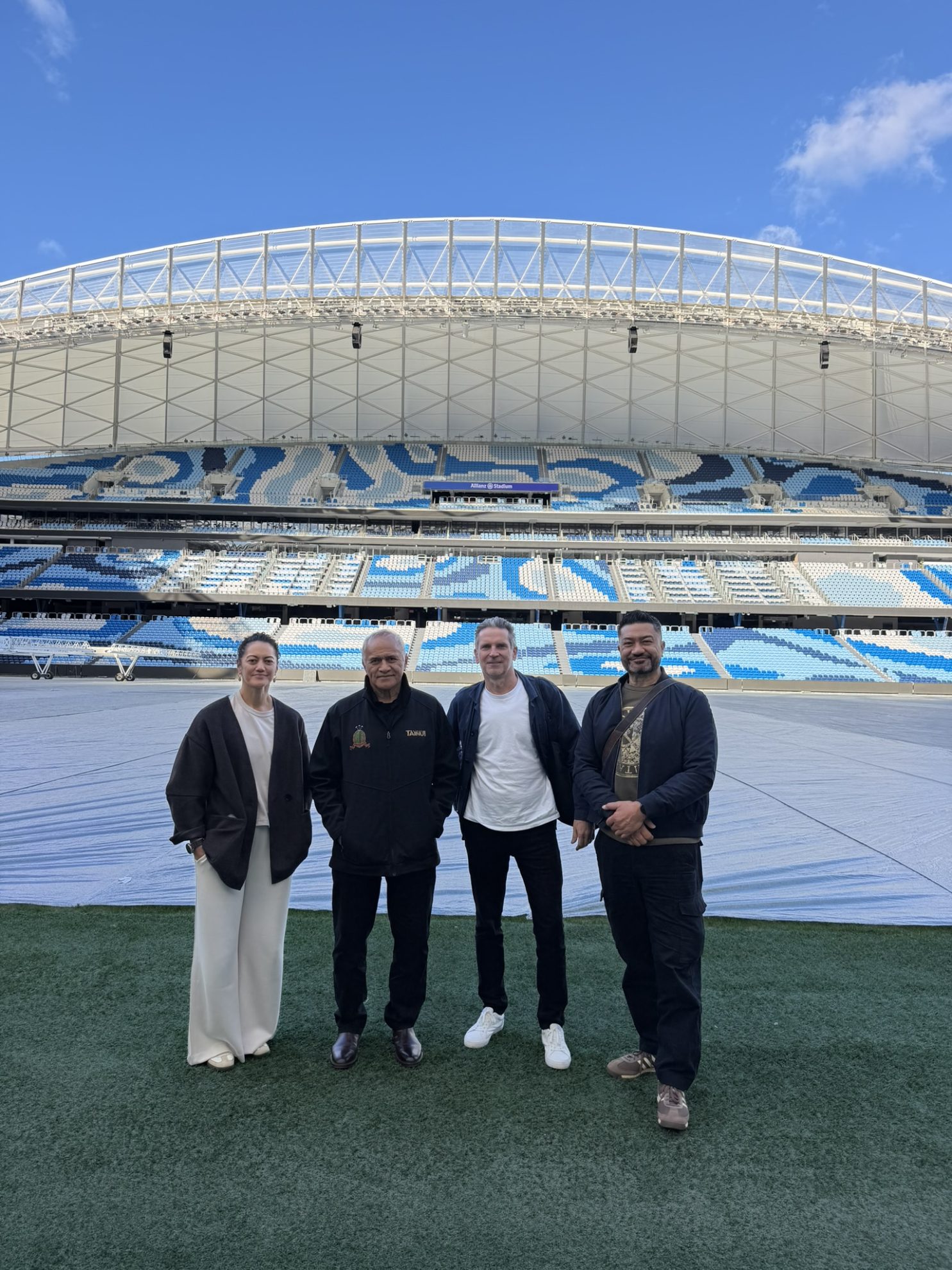
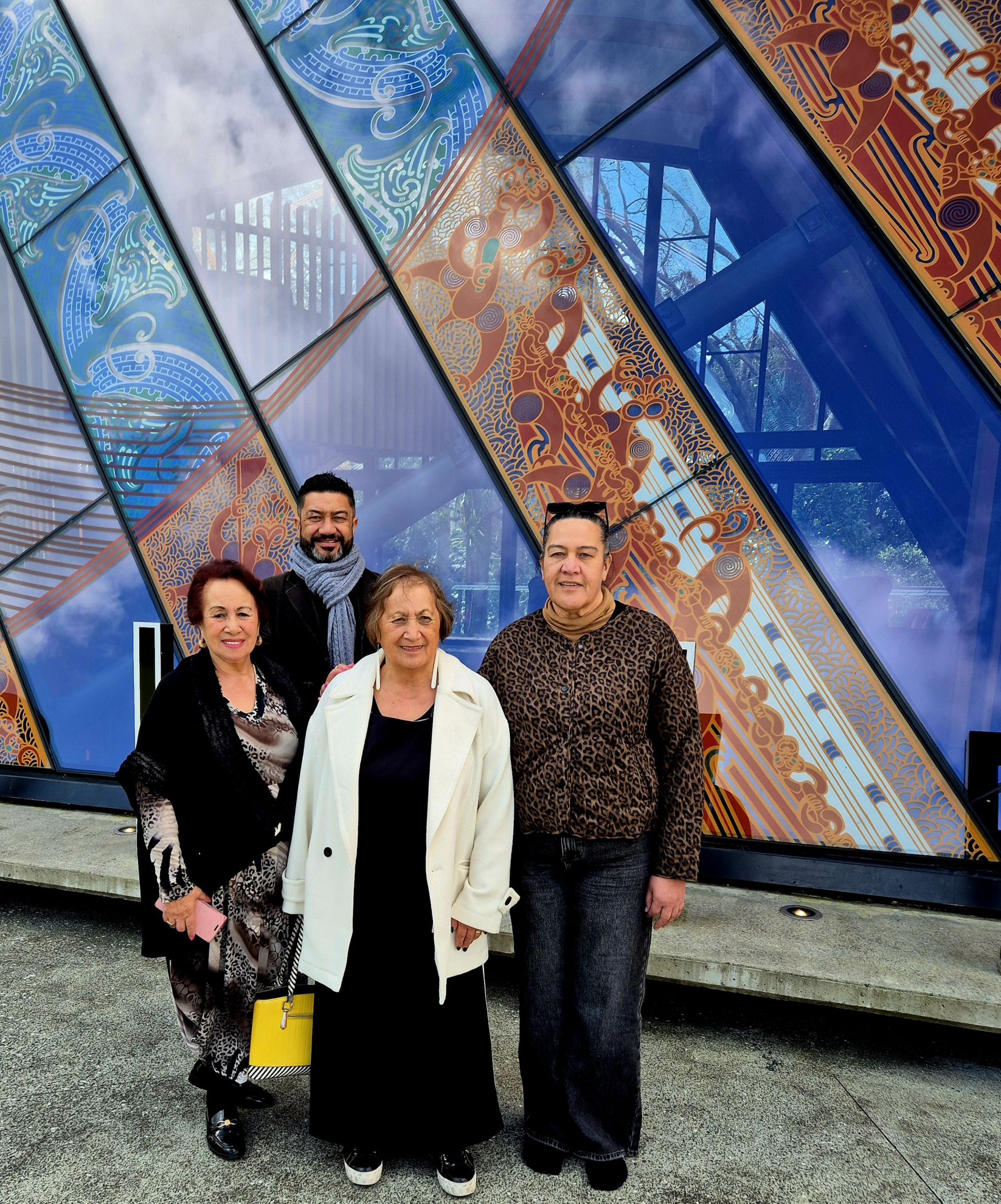
[Above left: Sydney Cricket Ground site visit with Waikato-Tainui & COX – Alieta Waitoa (GM Waikato-Tainui), Tukoroirangi Morgan (Chair of Waikato-Tainui), Chris Millman (COX), Saul Roberts (COX) | Above right: Site visit to Te Taumata o Kupe building with Christine Panapa (Māhurehure Marae), Saul Roberts, Christine Brears (Taumarunui Community Kokiri Trust) and Frana Chase (Taumarunui Community Kokiri Trust) – Māhurehure Marae, Tāmaki Makaurau]
What drew you to COX?
Relationships brought me here.
A colleague introduced me to Chris, and our engagement began through pōwhiri whakatau, a Māori welcoming process that grounded our intentions in tikanga from the outset.
I was drawn to COX’s scale – hospitals, bridges and stadia – and the potential for these capabilities to support Māori tribal aspirations across Aotearoa. Māori are experiencing a remarkable renaissance, expanding rapidly into the built environment and seeking partners who understand cultural nuance.
I wanted a home that moved beyond compliance and into genuine partnership.
Through kai and kōrero, the role emerged organically – in a way my grandmother would call he tohu, a celestial sign.
How will this role strengthen the work we do?
This role is ultimately about connections – between people, place, culture and design.
Internally, I hope to build cultural confidence across the studio so that understanding te ao Māori becomes shared knowledge, not specialist knowledge. When our teams naturally begin asking questions about whakapapa, tikanga, ecology and community before form and materiality, our design becomes more grounded, intuitive and enduring.
Externally, this role strengthens how COX engages with iwi, hapū, marae, clients and partners. Trust is not built through consultation meetings alone; it is built through relationships, reciprocity and consistency.
Having spent much of my life working between Māori communities and the built environment sector, I can help bridge worlds – creating opportunities for meaningful engagement where communities feel heard, respected and empowered.
Looking ahead, what impact do you hope your work will have?
I hope our projects become known not only for architectural excellence, but for cultural integrity – places that understand where they stand and honour the stories they inherit.
If our people grow in confidence, if our relationships deepen, and if communities feel seen, heard and respected, then this role will have made a meaningful contribution.
Architecture outlives us. My hope is that the work we do together strengthens identity, revitalises language, nurtures wellbeing and leaves behind a legacy worthy of future generations.
If our buildings are remembered not only for how they looked, but for how they strengthened indigenous peoples and carried culture forward, then we will have achieved something truly enduring.
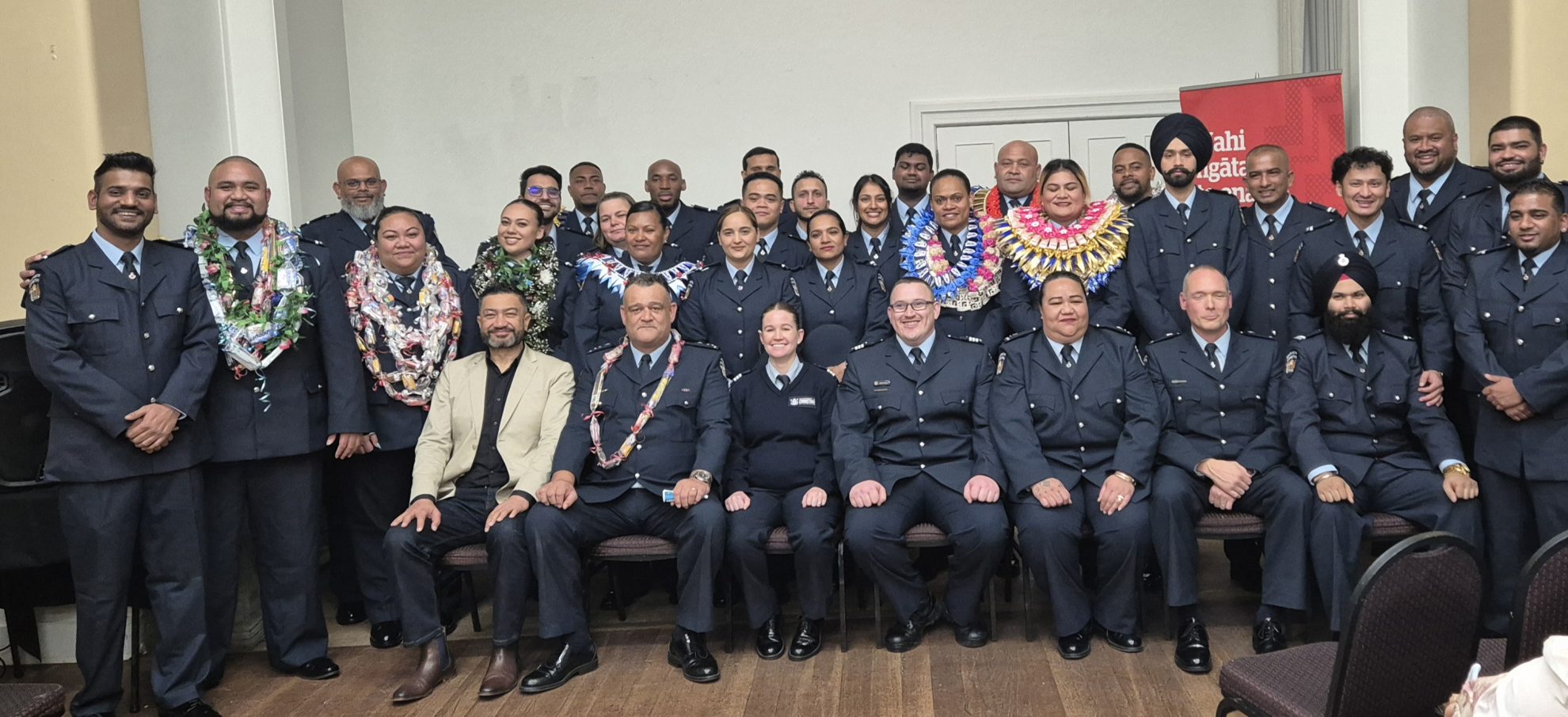
[Bottom: Ruānuku/Kaumātua voluntary role with the Department of Corrections (Mount Eden Correctional Facility) – Graduation Ceremony]