CASE STUDY: Browne Park and why regional stadiums must belong to their place
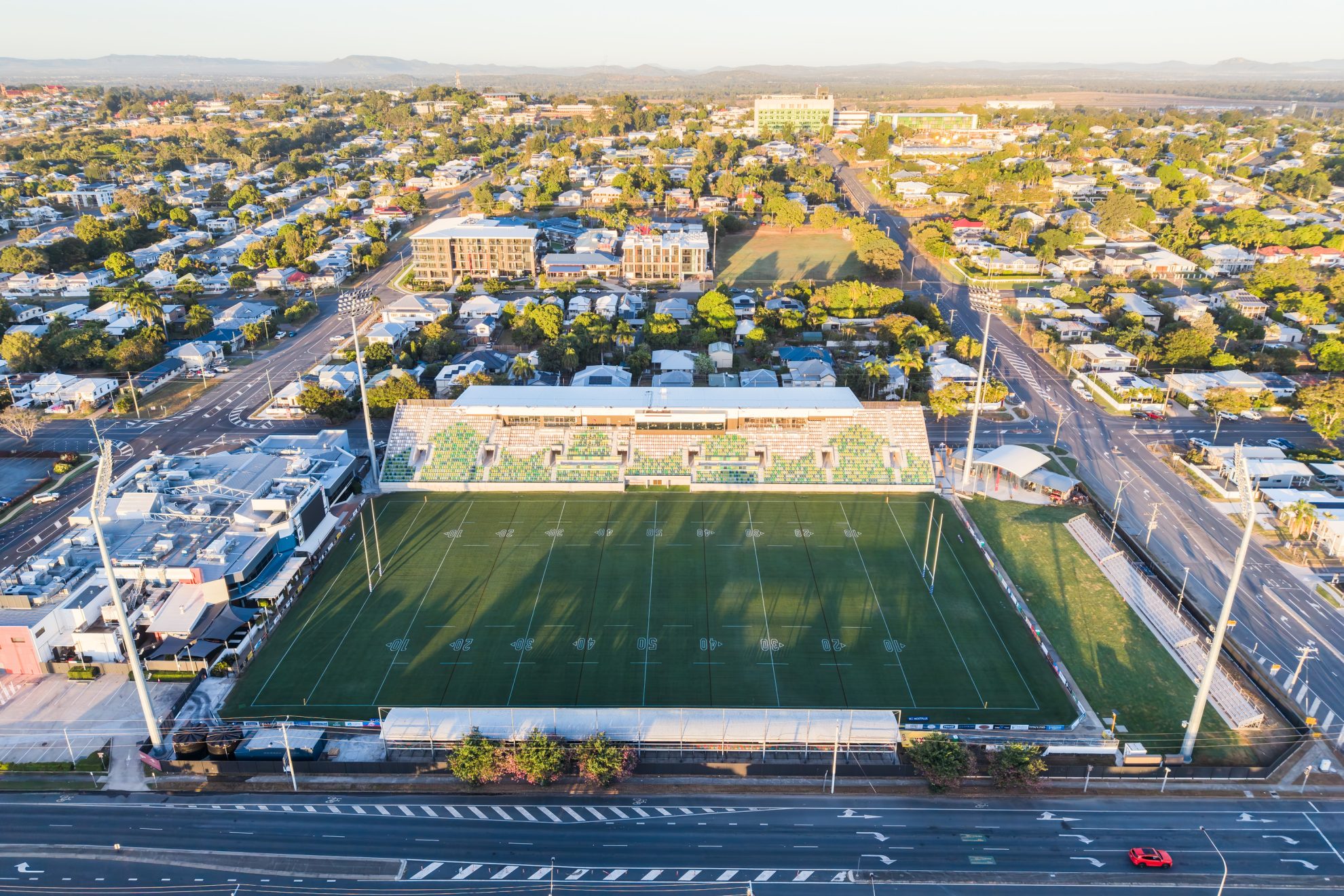
How the redevelopment of Rockhampton’s Browne Park, now Aurizon Stadium, drew on Darumbal Country and the surrounding mountains to create a stadium the region recognises as its own.
The case for a major stadium is usually made in visitors, jobs and spending, as COX’s 2025 research, From Suburbs to Cities: Stadium Economics, shows across venues such as Adelaide Oval and Optus Stadium. In a regional city, the case rests just as much on how a community feels about its home ground, one of the places where identity, belonging and connection are built, and a redevelopment only keeps that role if people still recognise the ground as theirs.
Long before organised sport arrived, the land around Rockhampton’s Browne Park was a place of gathering and ceremony for the Darumbal People. Rugby League has been played here since 1890, and for as long as anyone can remember, Indigenous and non-Indigenous children have played side by side while their families came to watch. The region’s Indigenous community has made a great contribution to Rugby League in Rockhampton, with many local players going on to state and national representation.
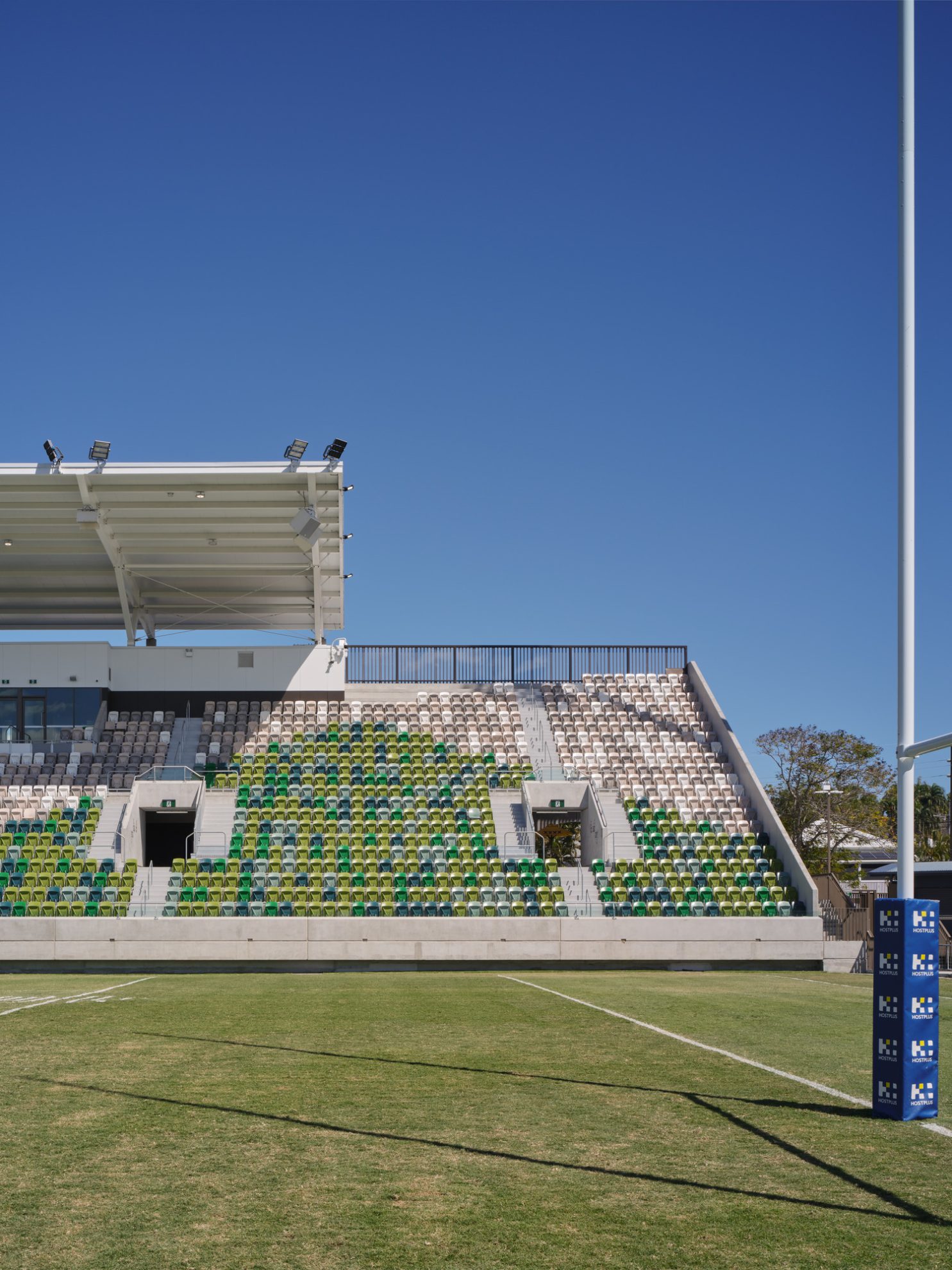
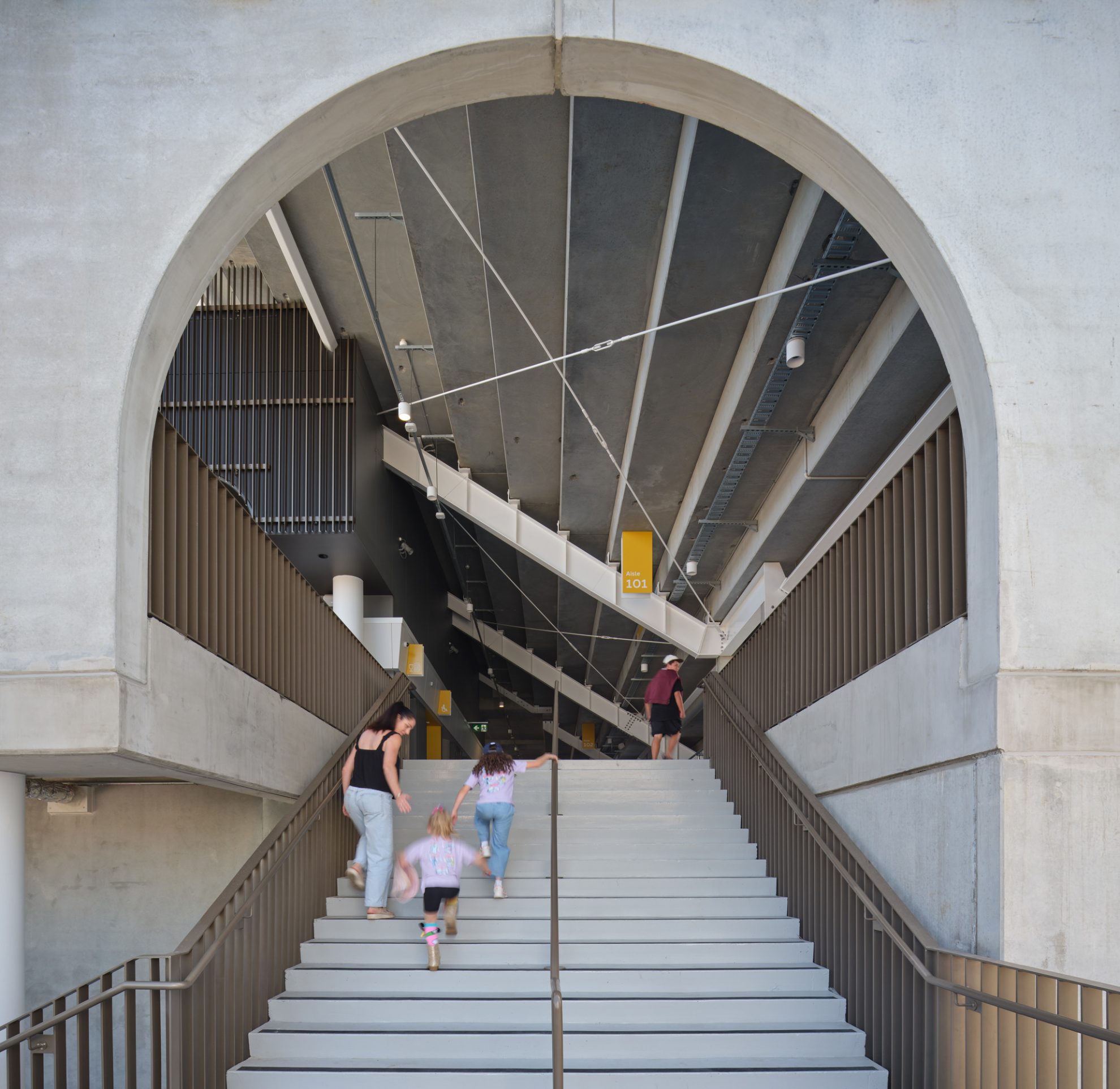
Designed by COX in collaboration with Design+Architecture and delivered by Hutchies in partnership with the Queensland Government, the Browne Park redevelopment replaced the old Jack Crow Stand with a grandstand of more than 3,200 seats. The redevelopment offered an opportunity to acknowledge both colonial and pre‑colonial histories. Members of the local Darumbal community shared their knowledge of Country with the design team, shaping how the new stand responds to the land around it.
COX Chair and Project Director, Richard Coulson
Any stadium can seat a crowd and host a game, but not all can successfully hold the stories a place already carries. Browne Park holds generations of them, and the land holds the Darumbal People’s stories from long before that. Our task was to make sure the new stand carried that history forward and nothing was lost.
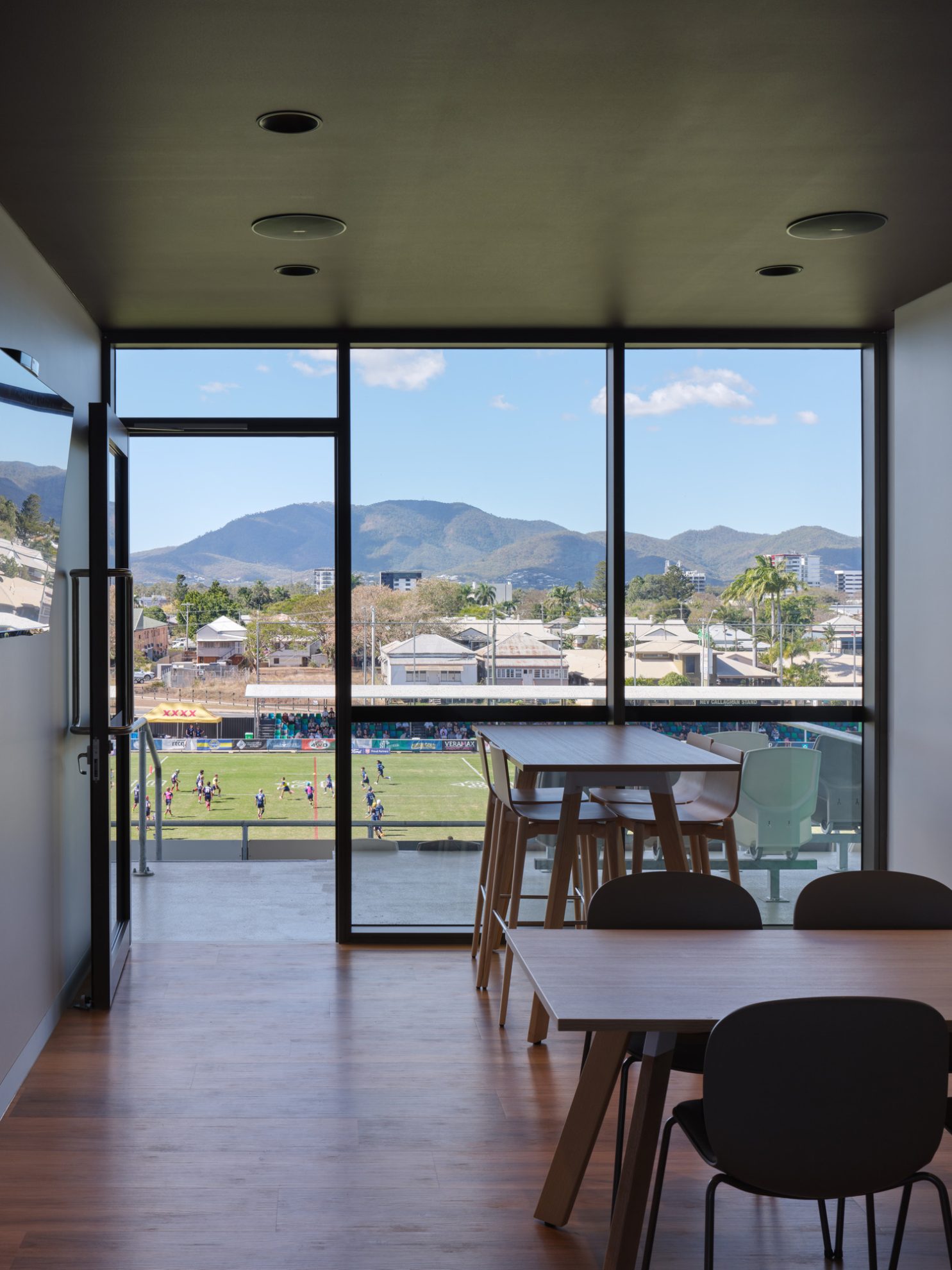
Facing Nurim (Mt Archer), a place of healing for the Darumbal People and of refuge in times of flood, the simple device of the grandstand’s seating pattern capturing the topography of the surrounding mountains, bringing a landscape every local knows into the stadium itself. The same mountains frame the view from the function room, which looks east to Nurim and west to The Range. Aunty Nhaya Nicky Hatfield, of the Darumbal community, describes a ground that brings people together even when two teams face each other on the field.
“It is a place to play with heart, to stand in good spirit and to be surrounded by the cultural presence of the mountains,” said Aunty Nhaya.
Beyond that sense of place, the stand brings the broadcast, coaching and universally designed player facilities of a modern stadium, so Rockhampton can welcome higher-profile fixtures while the ground still hosts school competitions and local fixtures.
The community’s response came on opening day, when 4,500 people filled the ground for the CQ Capras’ first home game in two years with a renewed sense of pride, and local rugby league grand final day has since returned to the stadium.